Prioritization tools
Free MoSCoW Prioritization Calculator
Interactive release board
Classify your release, not one isolated feature
Start with the examples, add your own requests, then move each item to the category your team can defend.
Must have
Release fails without it
Should have
Important, with a workaround
Could have
Valuable if capacity remains
Won't have
Explicitly outside this release
Your release is taking shape
Keep the decision connected to the evidence
ProductLift connects each category to customer votes, MRR, private team input, comments, and the roadmap that follows.
Use the menu on a card to move it between categories.
Must is a test
Ask whether the release still works without the item. If it does, it is not a Must.
Need the method?
Read the practical MoSCoW guide for category tests, workshops and failure modes.
Prefer a spreadsheet?
Download the Excel template for a release review outside the browser.
Other Prioritization Methods
RICE Calculator ICE Calculator WSJF Calculator Kano Model Opportunity ScoringView all tools →
Frequently Asked Questions
Prioritization library
Choose a method, calculate a score, then apply it
This library connects every ProductLift prioritization guide, calculator, template, and product workflow. Start with the framework guide if you do not know which method fits your decision.
Start and compare
Pick the right route before committing to a scoring model.
RICE
Balance reach, impact, confidence, and effort.
ICE
Score ideas quickly with impact, confidence, and ease.
MoSCoW
Classify requirements by what a release must, should, could, or will not include.
Other methods and tools
Use a visual matrix or a specialized model when simple scoring is not enough.
The faster, easier way to capture user feedback at scale
Join over 5,204 product managers and see how easy it is to build products people love.





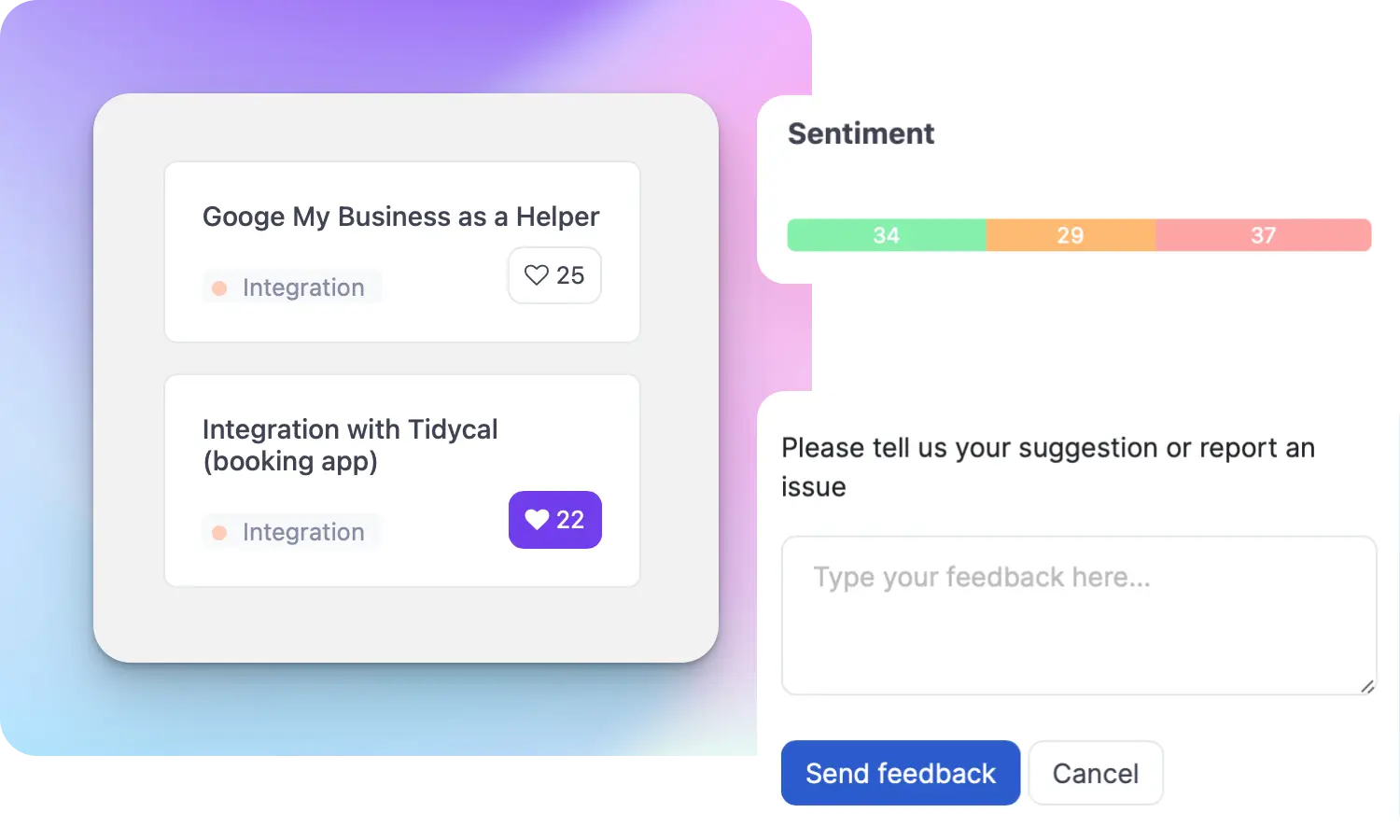
Did you know 80% of software features are rarely or never used? That's a lot of wasted effort.
SaaS software companies spend billions on unused features. In 2025, it was $29.5 billion.
We saw this problem and decided to do something about it. Product teams needed a better way to decide what to build.
That's why we created ProductLift - to put all feedback in one place, helping teams easily see what features matter most.
In the last five years, we've helped over 5,204 product teams (like yours) double feature adoption and halve the costs. I'd love for you to give it a try.

Ruben Buijs
Founder & Digital Consultant