Average Revenue Per User (ARPU) Calculator
What is Average Revenue Per User (ARPU)?
Average Revenue Per User (ARPU) is a metric that measures the revenue generated per user or customer, typically on a monthly or yearly basis. It's a key indicator of a company's financial performance and the value derived from each customer.
ARPU Formula:
ARPU is crucial for assessing business growth, pricing strategies, and customer value. It's often used alongside metrics like Monthly Recurring Revenue (MRR) and Customer Lifetime Value (CLV) to get a comprehensive view of business performance.
Related Calculators
MRR Calculator CLV Calculator Payback Period CAC Calculator Net Revenue RetentionView all tools →
Frequently Asked Questions
- Helps assess the financial health of a business
- Indicates the value derived from each customer
- Assists in developing pricing strategies
- Helps in forecasting future revenue
- Allows for comparison with industry benchmarks
- Guides customer acquisition and retention strategies
- Upselling: Encourage customers to upgrade to higher-tier products or services
- Cross-selling: Offer complementary products or services
- Pricing optimization: Adjust your pricing strategy based on value delivered
- Focus on high-value customers: Target and retain customers who generate more revenue
- Improve product value: Enhance your offering to justify higher prices
- Reduce discounts: Be strategic about when and how you offer discounts
- Monthly Recurring Revenue (MRR): MRR is calculated by multiplying ARPU by the number of customers. Use our MRR Calculator to see this relationship.
- Customer Lifetime Value (CLV): ARPU is a key component in calculating CLV. Higher ARPU often leads to higher CLV. Calculate your CLV using our CLV Calculator.
- Customer Acquisition Cost (CAC): ARPU helps determine how quickly you can recover your CAC. Use our CAC Calculator to compare.
- Churn Rate: ARPU can help you understand the impact of customer churn on your revenue. Track this alongside your Customer Retention Rate.
- B2B: Often have higher ARPU due to higher-priced products/services and longer-term contracts. May have more variability in ARPU between different customer segments.
- B2C: Usually have lower ARPU but potentially larger customer bases. ARPU might be more consistent across the customer base.
The faster, easier way to capture user feedback at scale
Join over 5,204 product managers and see how easy it is to build products people love.





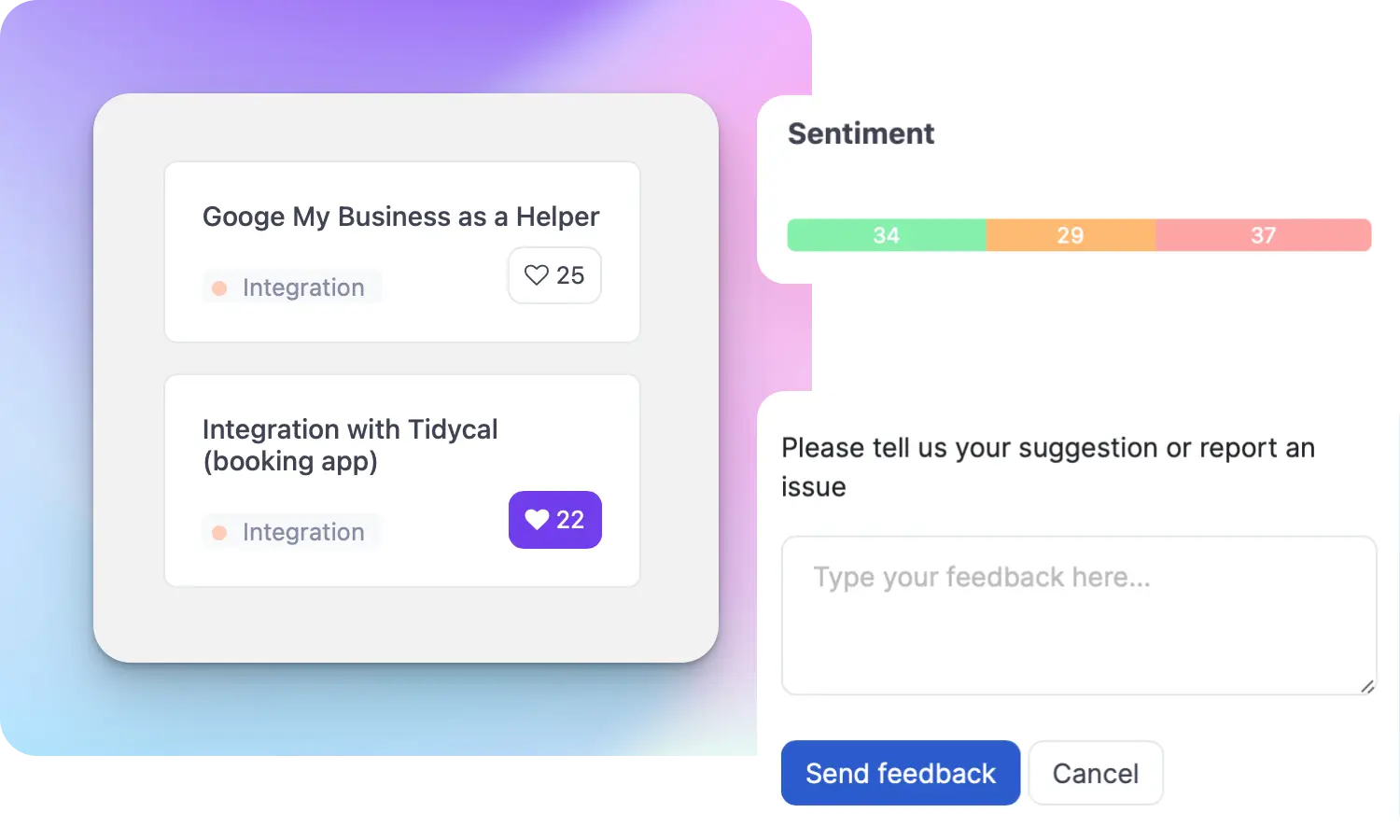
Did you know 80% of software features are rarely or never used? That's a lot of wasted effort.
SaaS software companies spend billions on unused features. In 2025, it was $29.5 billion.
We saw this problem and decided to do something about it. Product teams needed a better way to decide what to build.
That's why we created ProductLift - to put all feedback in one place, helping teams easily see what features matter most.
In the last five years, we've helped over 5,204 product teams (like yours) double feature adoption and halve the costs. I'd love for you to give it a try.

Ruben Buijs
Founder & Digital Consultant