NPS Calculator: Instant Net Promoter Score, Free
NPS ranges from -100 to +100. Anything above 0 is net-positive, above +30 is good, above +50 is excellent, and above +70 is outstanding. Enter your survey counts below to calculate instantly.
What is NPS?
Net Promoter Score (NPS) measures customer loyalty by asking: "How likely are you to recommend us to a friend?" Responses are scored 0-10 and grouped into Promoters (9-10), Passives (7-8), and Detractors (0-6).
NPS Formula:
NPS ranges from -100 (all detractors) to +100 (all promoters). A positive score is good, above 50 is excellent.
NPS Benchmarks:
- 70+: Outstanding
- 50-69: Excellent
- 30-49: Good
- 0-29: Needs improvement
- Below 0: Critical
Related Calculators
Product-Market Fit Kano Model Churn Rate Retention Rate CLV CalculatorView all tools →
How is NPS calculated?
NPS is the percentage of promoters minus the percentage of detractors. First, ask customers the standard question: "On a scale of 0 to 10, how likely are you to recommend us to a friend or colleague?" Then group the responses:
- Promoters score 9 or 10.
- Passives score 7 or 8.
- Detractors score 0 through 6.
Calculate the percentage of each group against total responses, then subtract detractors from promoters. Passives are counted in the total but do not add to the score. For example: 100 responses with 60 promoters, 25 passives, and 15 detractors gives 60% promoters minus 15% detractors, which is an NPS of +45. Round to the nearest whole number. The result is always an integer between -100 and +100.
What is a good NPS score?
Any positive score means you have more promoters than detractors, which most researchers treat as the baseline for "good." Beyond that, four widely used thresholds apply:
- Above +70: outstanding, typical of category leaders with strong word-of-mouth.
- +50 to +70: excellent, sustained loyalty across most segments.
- +30 to +50: good, healthy customer sentiment with room to grow.
- 0 to +30: needs improvement, promoters and detractors roughly balanced.
- Below 0: critical, more detractors than promoters, urgent action needed.
Do not compare in isolation. Track your own score over time and against direct competitors in your industry, because absolute NPS varies significantly by sector.
How to interpret NPS by industry?
NPS benchmarks differ sharply by industry. A score that looks weak in one sector can be exceptional in another, so always compare to peers.
- B2B SaaS: median around +30 to +40. Top-quartile products land above +50.
- Consumer software / apps: +40 to +60 is common for well-loved products.
- E-commerce and retail: +30 to +50 for healthy brands.
- Financial services and insurance: +10 to +30, often lower because switching costs mask satisfaction.
- Telecom and utilities: historically 0 to +20, sometimes negative.
- Healthcare: +40 to +60 for patient-facing services.
Segment your NPS by customer size, plan tier, and tenure. A single company-wide number hides most of what is actionable. New customers usually score higher than long-tenured ones, and enterprise segments often score lower than SMB because expectations differ.
Tracking NPS across releases? Capture user feedback and score by segment in ProductLift. Free 14-day trial, no credit card required.
Start free
Related reads: Customer retention rate calculator · Customer feedback in product launch
Frequently Asked Questions
The faster, easier way to capture user feedback at scale
Join over 5,204 product managers and see how easy it is to build products people love.





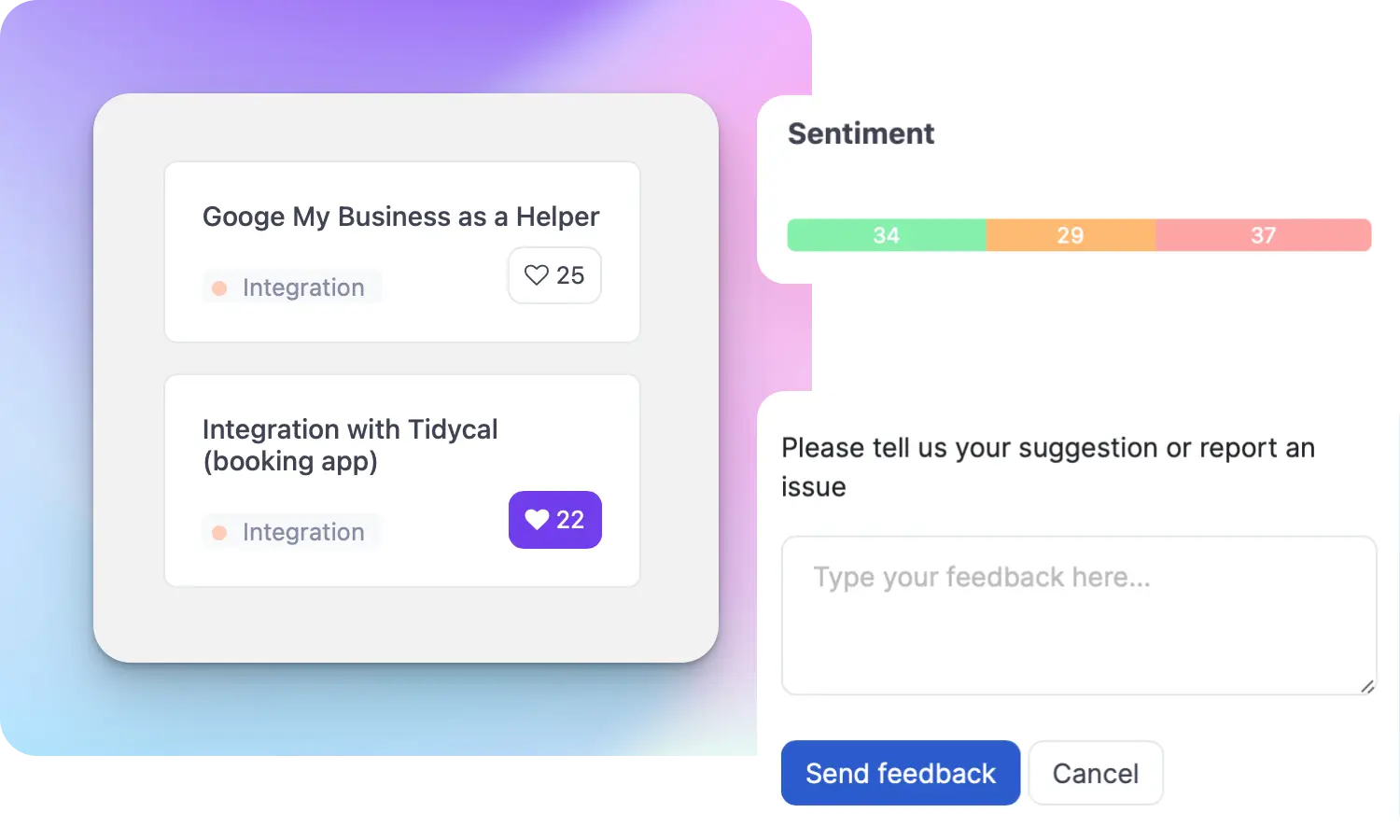
Did you know 80% of software features are rarely or never used? That's a lot of wasted effort.
SaaS software companies spend billions on unused features. In 2025, it was $29.5 billion.
We saw this problem and decided to do something about it. Product teams needed a better way to decide what to build.
That's why we created ProductLift - to put all feedback in one place, helping teams easily see what features matter most.
In the last five years, we've helped over 5,204 product teams (like yours) double feature adoption and halve the costs. I'd love for you to give it a try.

Ruben Buijs
Founder & Digital Consultant