 Ruben Buijs
A product prioritization framework helps you decide what to build next using data instead of opinions. It helps you justify plans to stakeholders, listen to customers, and build features users need, boosting satisfaction and revenue.
Yet the stakes are high: McKinsey research shows that over 50% of product launches fail to hit business targets, and PMI reports that only 35% of projects finish successfully. Meanwhile, data-driven product teams are 2.9x more likely to launch products that meet their business goals.
Prioritization frameworks help teams make data-driven decisions and focus on what matters most. While many frameworks exist, 68% of teams rely on just three. This article explores these three along with seven additional methods.
Looking for something specific? We also have guides on prioritization for startups, a side-by-side framework comparison, how to choose the right framework, and real-world examples.
A Real-World Example
When I worked with AirFrance/KLM on their cargo reporting MVP, we faced a common challenge: a long wishlist from stakeholders but tight timeline and budget. We used MoSCoW to make tough calls:
- Must-haves: Flight leg optimization reporting. This alone saves millions in fuel costs annually by helping dispatchers choose efficient routes
- Should-haves: Real-time cargo weight distribution dashboards for load planners
- Could-haves: UX improvements like dark mode and customizable layouts
- Won't-haves: Integration with legacy systems that would delay launch by months
This clarity helped us deliver on time and budget. The MVP resonated because we focused on what actually saved money, not what looked nice in demos.
Another Example: RICE at a B2B SaaS Startup
At a previous B2B SaaS startup I advised, the product team had 40+ feature requests from customers but only two developers. Gut feeling wasn't going to cut it. We scored every request using RICE:
- Top scorer: API webhooks. High reach (requested by 60% of paying customers), high impact (enabled integrations that reduced churn), high confidence (clear technical scope), moderate effort (3 weeks)
- Surprising result: A redesigned dashboard that the CEO championed scored low. Only 15% of users interacted with it daily, and the effort was 2 months
- Quick win: Bulk CSV export scored well because it was high reach, moderate impact, and only 2 days of effort
The team shipped webhooks first and saw a 12% reduction in churn within the quarter. The dashboard redesign was pushed to a later release. Without RICE, the CEO's enthusiasm would likely have won, a classic example of HiPPO (Highest Paid Person's Opinion) that frameworks help you avoid.
What are prioritization frameworks?
Prioritization frameworks provide a structured approach to deciding which features or projects to focus on next.
While not a silver bullet, they help move beyond intuition or personal preferences (or HiPPO, Highest Paid Person's Opinion) by using clear criteria and data to evaluate and rank initiatives.
This approach improves alignment with business goals and customer needs, ensuring the most valuable and impactful work is prioritized.
Overview of prioritization frameworks
There are many prioritization frameworks available, below we will dive into 10.
But first, I conducted research in November 2024 with 94 Dutch Product Teams to see which ones they use most.
Framework usage among Dutch Product Managers and Product Owners
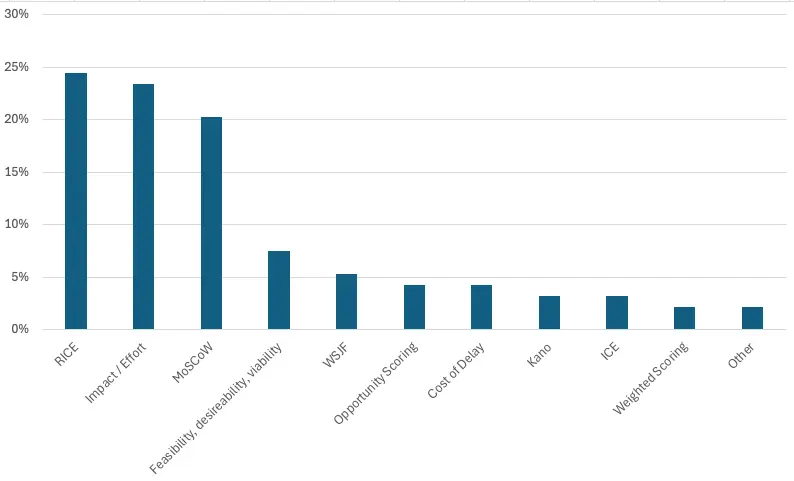
It's interesting to see RICE, Impact / Effort, and MoSCoW taking the lead
Below is a summary table of the prioritization methods we will discuss in this article.
| Framework | Description | When to Use |
|---|---|---|
| RICE | Evaluates features based on Reach, Impact, Confidence, and Effort. | When you need a quantitative and objective method. |
| Kano | Categorizes features into basic needs, performance needs, and delighters based on customer satisfaction. | When understanding customer satisfaction drivers is crucial. |
| Impact Effort (Value/Effort) | Assesses features based on their value and the effort required to implement them. | For quick prioritization in fast-paced environments. |
| ICE Scoring Model | Ranks features based on Impact, Confidence, and Ease. | When seeking a straightforward and rapid ranking method. |
| The MoSCoW Method | Divides features into Must-haves, Should-haves, Could-haves, and Won't-haves. | When managing scope and ensuring critical features are delivered first. |
| Opportunity Scoring | Evaluates features based on the gap between customer needs and current offerings. | To uncover and prioritize unmet customer needs. |
| Weighted Scoring Prioritization | Assigns weights to various criteria and scores features based on these weights. | When needing a detailed and customizable evaluation process. |
| WSJF (Weighted Shortest Job First) | Calculates cost of delay divided by job duration to prioritize high-value work quickly. | For Agile teams aiming to maximize economic benefits. |
| Cost of Delay | Quantifies the economic impact of delaying a feature to prioritize based on urgency and value. | When timing and financial considerations are critical. |
| Feasibility, Desirability, and Viability Scorecard | Assesses features based on their practicality, user appeal, and business sustainability. | To ensure balanced and sustainable product development. |
Each framework offers unique advantages and is suitable for different scenarios. Choosing the right one depends on your specific needs, the nature of your projects, and the factors that are most important to your team and stakeholders.
Now, let's dive deeper in each of them.
Common product prioritization frameworks
RICE
RICE is a prioritization method that helps you evaluate and prioritize features based on Reach, Impact, Confidence, and Effort.
RICE is particularly useful when you need a quantitative method to assess multiple features objectively. It works by assigning scores to each feature based on its Reach, Impact, Confidence, and Effort, enabling teams to compare and prioritize them effectively. For a comprehensive guide and template, visit RICE Prioritization Guide and access the RICE Template.
Components
| Component | Description |
|---|---|
| R (Reach) | How many of your customers would experience the new idea |
| I (Impact) | If the idea pans out, how much it would affect conversion |
| C (Confidence) | How likely it is to work |
| E (Effort) | Total effort needed to implement/build, usually in person-months. |
What has higher priority?
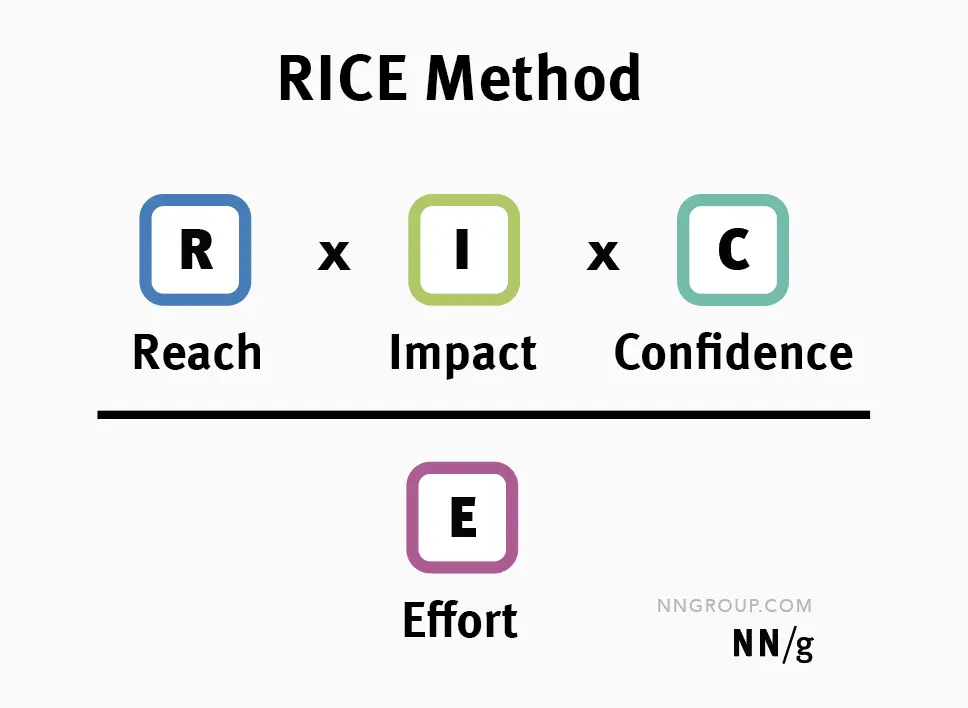
In RICE, assign a value to each component for every feature and use the following formula:
RICE Score = (Reach × Impact × Confidence) / EffortFeatures with higher Reach, Impact, or Confidence scores receive higher priority because they affect more users, contribute significantly to your goals, and have a higher certainty of success. Conversely, features that require more Effort to implement will have their priority lowered. This ensures that you focus on initiatives that maximize value while efficiently using your resources.
Pros
- Provides a numerical way to compare features, making decision-making clearer
- Aligns feature development with business objectives by focusing on high-impact areas
- Considers multiple factors, leading to more balanced product development prioritization
Cons
- Calculating scores for many features can take a lot of time
- Depends on accurate estimates, which can sometimes be hard to obtain
- May miss out on important qualitative aspects like user experience
📘 Read more in our RICE Prioritization Guide | Try the free RICE Calculator
Kano
The Kano model is a framework for prioritizing features based on customer satisfaction and their impact on delight.
Kano is relevant when you aim to understand how different features will affect customer satisfaction. It categorizes features into basic needs, performance needs, and delighters, helping teams balance essential functionalities with innovative enhancements.
Components
| Component | Description |
|---|---|
| Basic Needs | Fundamental features that customers expect. |
| Performance Needs | Features that increase customer satisfaction proportionally. |
| Delighters | Unexpected features that significantly boost customer satisfaction. |
| Indifferent | Features that do not impact customer satisfaction. |
| Reverse | Features that can cause dissatisfaction if present. |
What has higher priority?
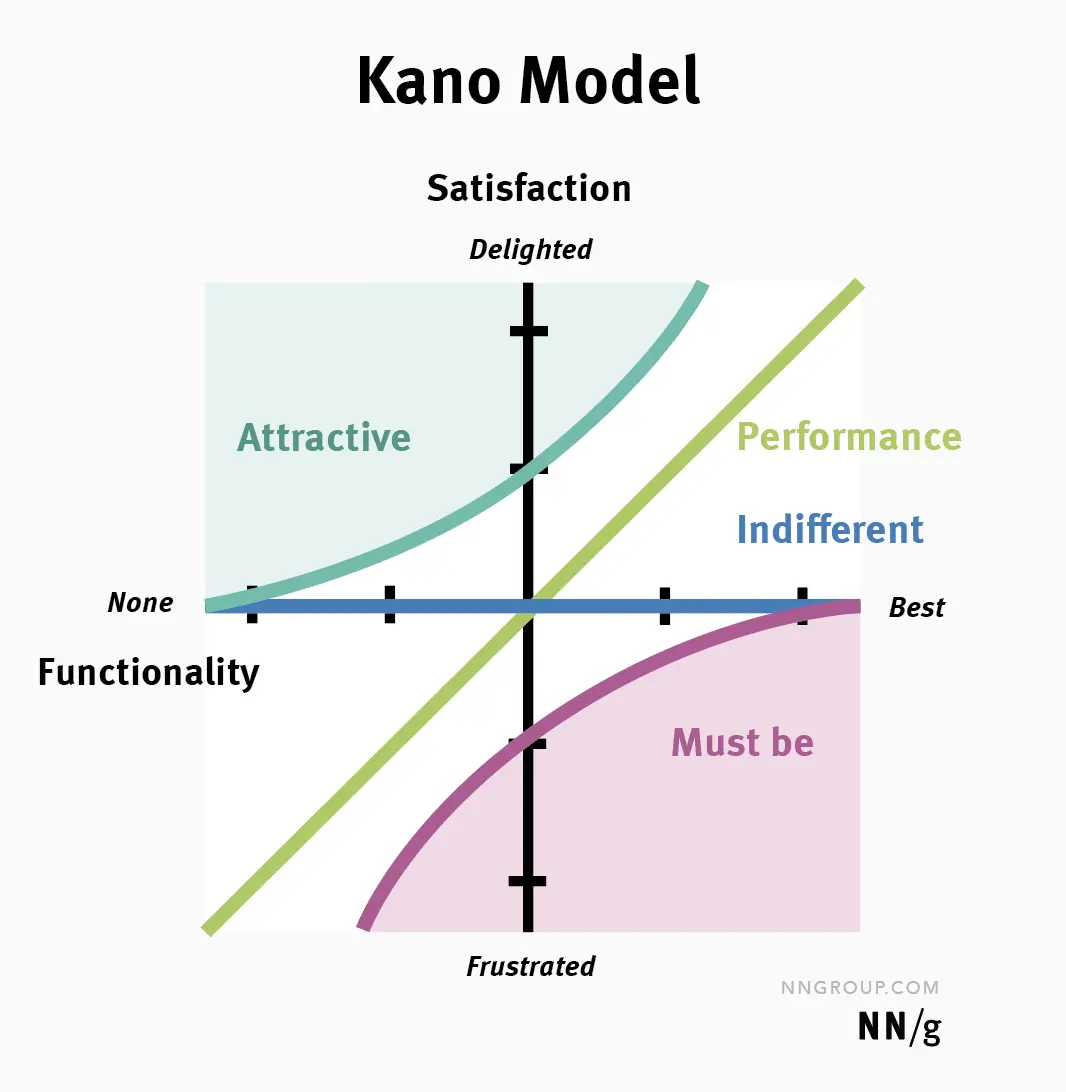
In the Kano model, prioritize features based on their category:
- Delighters have the highest priority because they can significantly boost customer satisfaction and differentiate your product from competitors
- Performance Needs come next, as they directly increase customer satisfaction in proportion to their performance
- Basic Needs are essential but have a lower priority since they are expected by customers and do not significantly increase satisfaction unless unmet
- Indifferent and Reverse features have the lowest priority or may even be excluded, as they do not impact or may negatively affect customer satisfaction
By categorizing features this way, you ensure that you focus on what will delight customers while meeting their fundamental expectations.
Pros
- Focuses on what truly satisfies customers, improving user happiness
- Helps identify unique features that can set your product apart
- Balances essential and innovative features to meet diverse customer needs
Cons
- Requires a lot of customer feedback, which can be time-consuming
- The way features are categorized can be subjective and vary between team members
- Might not work well for all types of products, especially those not customer-facing
Impact Effort (Value/Effort)
Impact Effort is a simple prioritization matrix that evaluates features based on their value (impact) and the effort required to implement them.
This framework is ideal for quickly identifying high-value, low-effort features to prioritize, making it useful in fast-paced environments where quick decisions are essential.
Components
| Component | Description |
|---|---|
| Impact (Value) | The potential benefit or value the feature brings to users or the business. |
| Effort | The amount of work required to implement the feature, typically measured in person-hours or days. |
What has higher priority?
In the Impact Effort matrix, features are plotted on a 2x2 grid based on their Impact (value) and Effort required to implement. This creates four quadrants:
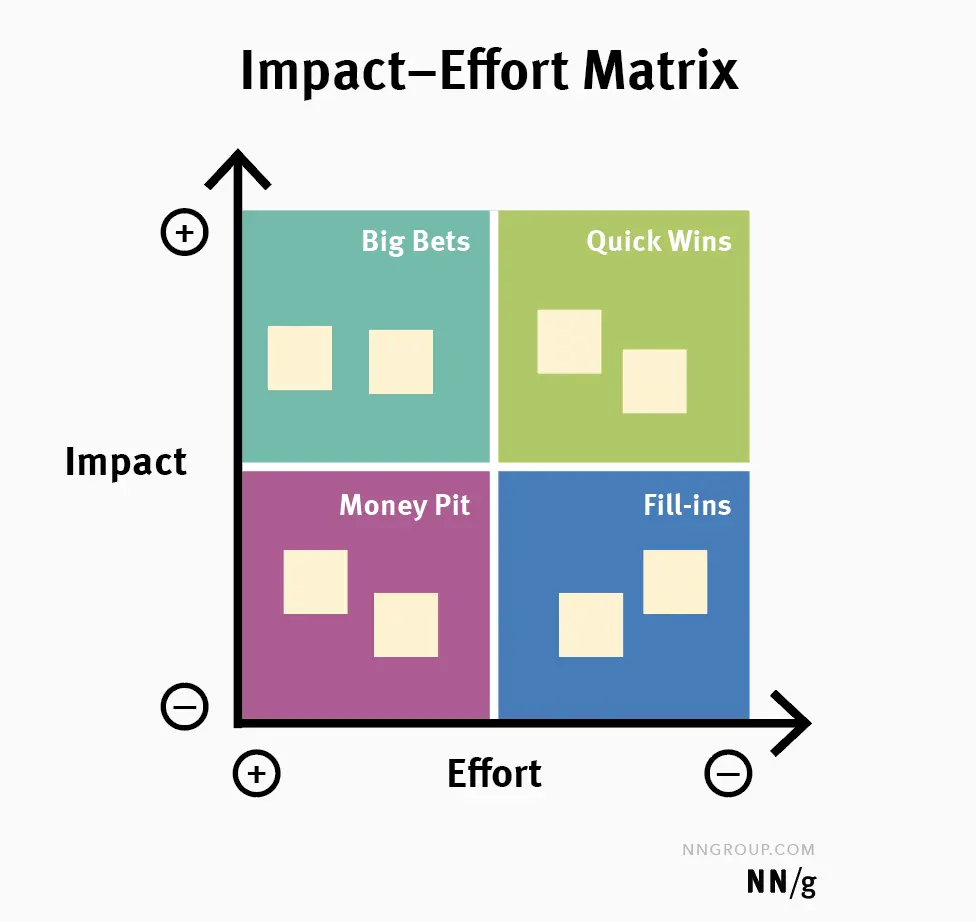
- Quick Wins (High Impact, Low Effort): These features have the highest priority as they offer significant value with minimal effort.
- Major Projects (High Impact, High Effort): These features are valuable but require substantial resources, so prioritize them carefully based on strategic importance.
- Fill-Ins (Low Impact, Low Effort): These features are easy to implement but offer limited value. They can be prioritized lower or included as extras.
- Time Sinks (Low Impact, High Effort): These features offer little value and require significant effort, so they are typically deprioritized or excluded.
This approach helps in quickly identifying which features to pursue for maximum benefit with minimal resource investment.
Pros
- Easy to understand and implement without complex calculations
- Provides a quick visual overview of which features to prioritize
- Helps ensure that resources are used on the most beneficial features
Cons
- Oversimplifies complex decisions because it only considers two factors
- Doesn't account for uncertainty or risks associated with features
- May ignore long-term benefits by focusing only on immediate impact
ICE Scoring Model
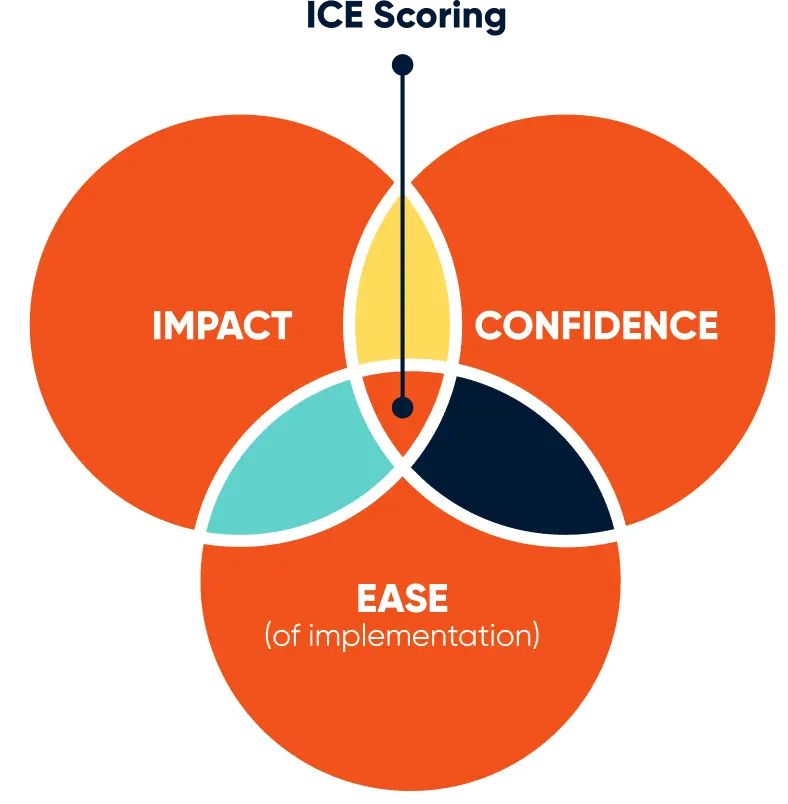
The ICE Scoring Model prioritizes features based on Impact, Confidence, and Ease, helping teams make informed decisions quickly.
ICE is useful for teams seeking a straightforward method to rank features by scoring each component, facilitating rapid product prioritization without extensive analysis. For a detailed guide and template, check out ICE Prioritization Guide and the ICE Template.
Components
| Component | Description |
|---|---|
| Impact | The potential positive effect of the feature on the business or users. |
| Confidence | The level of certainty in your impact and ease estimates. |
| Ease | The simplicity or difficulty of implementing the feature. |
What has higher priority?
In the ICE Scoring Model, assign values to Impact, Confidence, and Ease for each feature and use the following formula:
ICE Score = Impact × Confidence × EaseFeatures with higher Impact, Confidence, and Ease scores are given higher priority. This means that features expected to have a significant positive effect, backed by strong confidence, and are easy to implement will be prioritized over others. This ensures that your team focuses on initiatives that are both valuable and feasible.
Pros
- Simple and quick to apply without needing detailed data
- Takes into account multiple factors, providing a balanced view
- Can be easily adapted to different types of projects and teams
Cons
- Subjective scoring can lead to different interpretations among team members
- May not include all important factors, potentially missing key aspects
- Not suitable for very complex prioritization needs where more detail is required
📘 Read more in our ICE Prioritization Guide | Try the free ICE Calculator
The MoSCoW Method
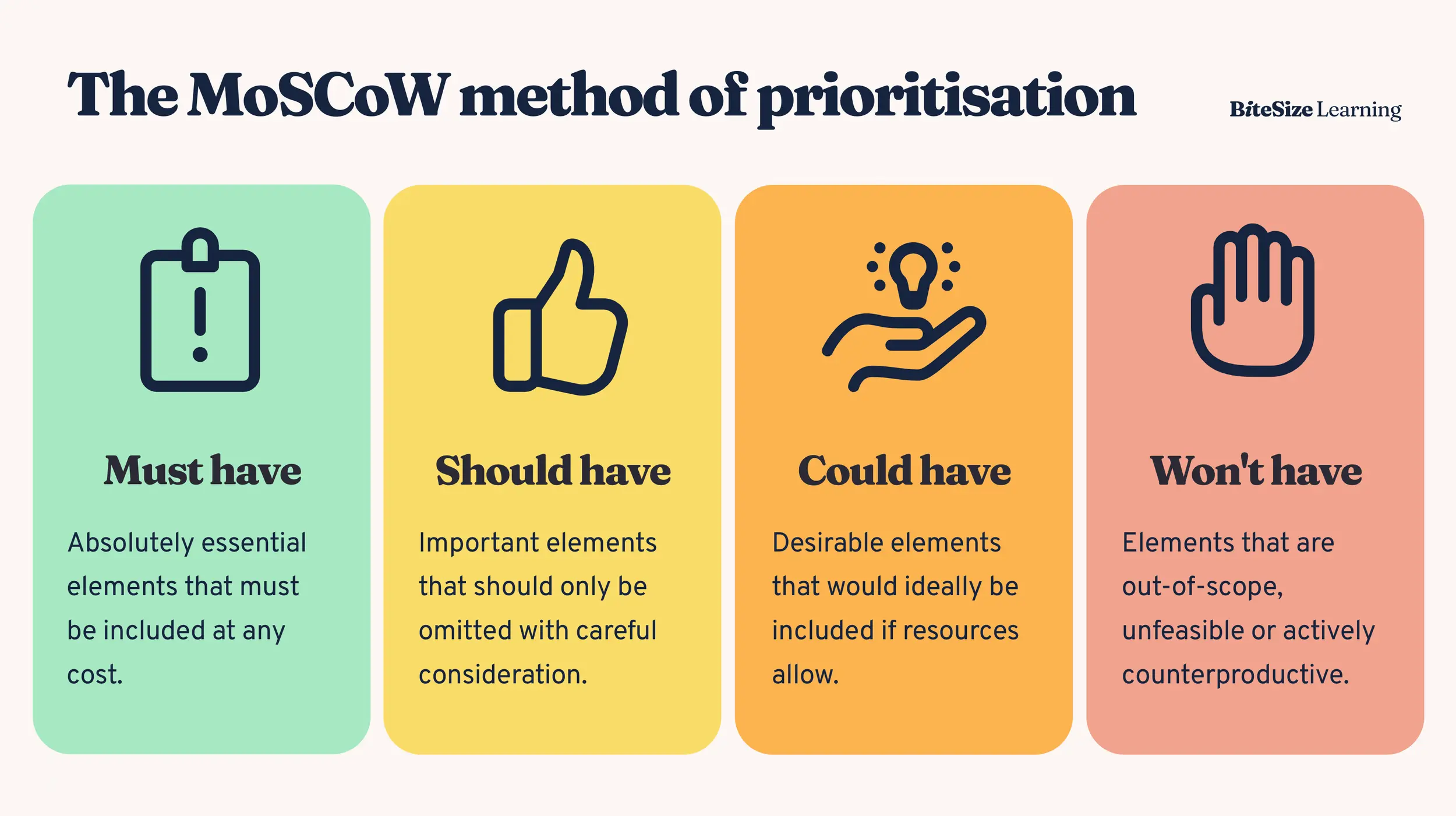
The MoSCoW method categorizes features into Must-haves, Should-haves, Could-haves, and Won't-haves to prioritize effectively.
MoSCoW is relevant when you need clear prioritization categories to manage scope and ensure that critical features are delivered first, especially in time-constrained projects. Explore the MoSCoW Prioritization Guide and access the MoSCoW Template.
Components
| Component | Description |
|---|---|
| Must-have | Essential features that are critical for success. |
| Should-have | Important features that add significant value but are not critical. |
| Could-have | Desirable features that can enhance the product if time and resources permit. |
| Won't-have | Features that are agreed to be excluded for the current timeline. |
What has higher priority?
Using the MoSCoW method, prioritize features based on their category:
- Must-haves are top priority and are essential for the project's success. Without these, the product would fail to meet its core objectives
- Should-haves are important but not critical, adding significant value but can be deferred if necessary
- Could-haves are desirable and can enhance the product if time and resources allow, but they are not essential
- Won't-haves are features agreed to be excluded for the current timeline, allowing the team to focus on more critical tasks
This categorization ensures that critical features are delivered first, while less important ones are addressed as resources permit, effectively managing project scope and priorities.
Pros
- Provides clear categories, making it easy to understand priorities
- Simplifies communication with stakeholders by clearly defining what is essential
- Helps control project scope by distinguishing between necessary and optional features
Cons
- Can be rigid in environments where priorities change quickly
- May oversimplify by not considering nuances between different features
- Subject to personal biases, which can affect how features are categorized
📘 Read more in our MoSCoW Prioritization Guide
Opportunity Scoring
Opportunity Scoring evaluates features based on the gap between customer needs and the current product offerings, identifying high-potential opportunities.
This framework is ideal for uncovering unmet needs and prioritizing features that address them, ensuring that your product evolves in line with customer demands.
Components
| Component | Description |
|---|---|
| Customer Need | The specific requirement or problem that needs addressing. |
| Current Satisfaction | How well the current product meets the customer need. |
| Importance | The significance of the need to the customer. |
| Opportunity | The potential improvement or feature to address the need. |
What has higher priority?
In Opportunity Scoring, calculate the Opportunity Score using:
Opportunity Score = Importance × (1 - Current Satisfaction)Features that are highly important to customers and have low current satisfaction scores are given higher priority. This means addressing high-importance areas where current satisfaction is low will yield the most significant opportunities for improvement and customer satisfaction. Conversely, features that are either low in importance or already well-satisfied should be deprioritized, ensuring that resources are focused on areas that will have the most substantial impact.
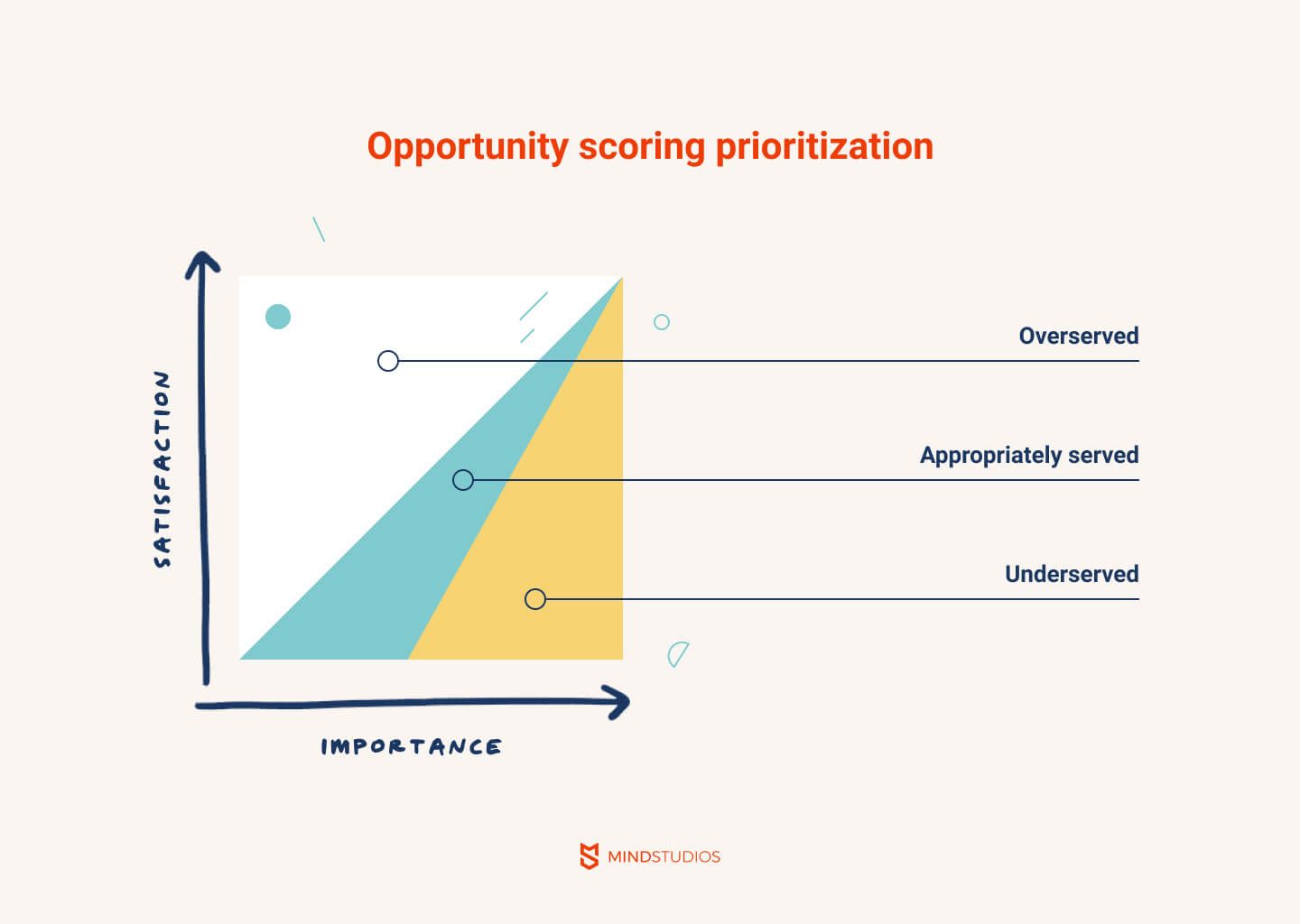
Typically, features are plotted on a graph with Importance on the X-axis and Current Satisfaction on the Y-axis, divided into three areas:
-
Underserved Features (High Importance, Low Satisfaction):
These features should be prioritized because they address important customer needs that are not currently being met. Focusing on these areas can significantly enhance customer satisfaction and fill critical gaps in your product. -
Balanced Features (High Importance, High Satisfaction):
These features are already meeting customer needs well. While they are important to maintain, they may not require immediate improvement and can be sustained to ensure continued satisfaction. -
Overserved Features (Low Importance, High Satisfaction):
These features exceed customer needs and provide little additional value. They are typically given lower priority as they do not offer substantial additional value.
By focusing on Underserved Features, you ensure that your efforts are directed towards areas that will have the most significant impact on customer satisfaction and product relevance.
Pros
- Focuses on what customers really need, improving product relevance
- Helps identify areas where improvements can have a big impact
- Encourages the creation of features that add real value for users
Cons
- Requires detailed research to understand customer needs, which can take time
- Analyzing the data thoroughly can slow down the product roadmap prioritization process
- Might miss broader business goals by focusing too much on specific customer needs
Weighted Scoring Prioritization
Weighted Scoring Prioritization assigns weights to various criteria and scores features based on these weights to determine their priority.
This product backlog prioritization method allows for a balanced evaluation of features against multiple factors, making it suitable for projects with diverse and competing priorities.
Components
| Component | Description |
|---|---|
| Criteria | The factors against which features are evaluated (e.g., ROI, strategic alignment). |
| Weight | The importance assigned to each criterion. |
| Score | The rating of each feature against each criterion. |
What has higher priority?
In Weighted Scoring Prioritization, assign weights to each criterion and score each feature accordingly. Use the following formula to calculate the total score:
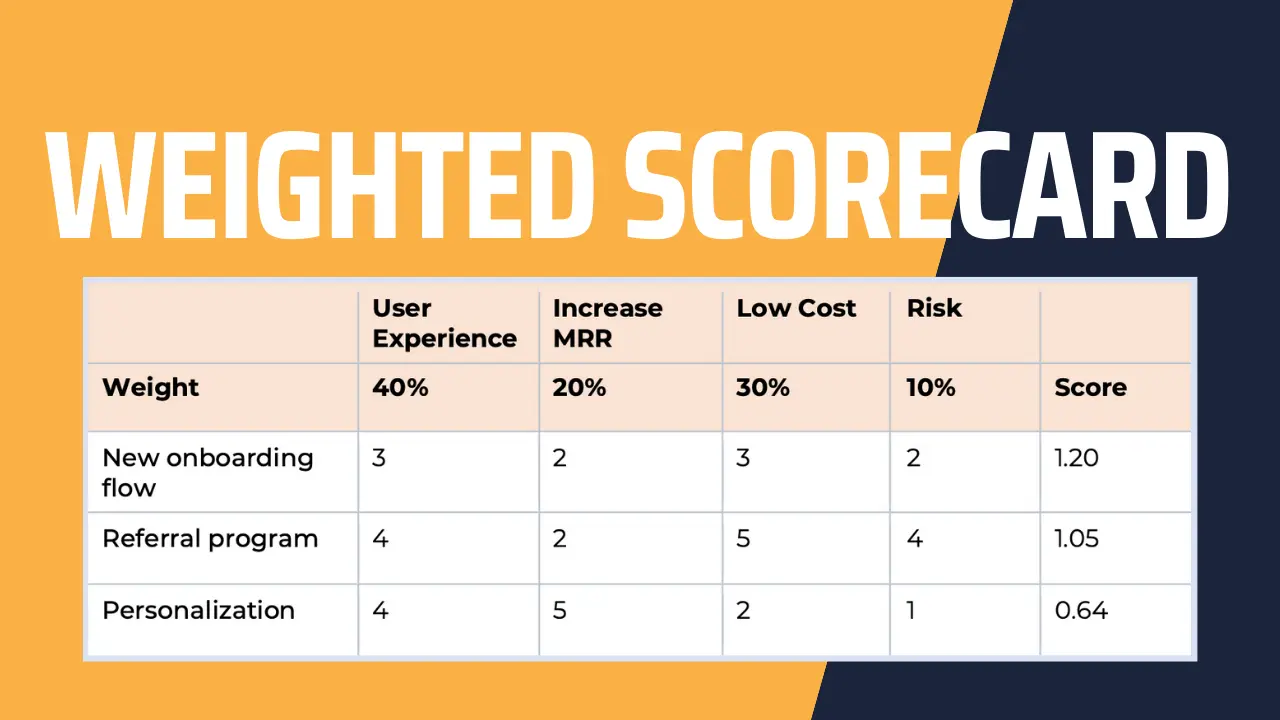
Total Score = Σ (Weight × Score) for all criteriaFeatures with higher total scores are prioritized because they meet more weighted criteria effectively. This approach ensures a balanced evaluation based on multiple important factors, allowing you to focus on features that align best with your strategic goals and priorities.
Typically, you can make a weighted scorecard, like below.
Pros
- Allows for a detailed and customized evaluation of features
- Takes multiple factors into account, leading to well-rounded prioritization
- Provides a clear and transparent rationale for decisions
Cons
- Can be complicated to set up, requiring careful selection of criteria and weights
- Needs team agreement on weights and criteria, which can be difficult to achieve
- Maintaining and updating the scores can take a lot of time
WSJF (Weighted Shortest Job First)
WSJF is a prioritization framework used in Agile that calculates the cost of delay divided by job duration to prioritize work that delivers the most value quickly.
WSJF helps maximize economic benefits by balancing value and delivery time, making it particularly relevant for Agile teams focused on optimizing their workflow and delivering high-impact features swiftly.
Components
| Component | Description |
|---|---|
| Cost of Delay | The economic impact of delaying a feature (see below framework for more detail). |
| Job Duration | The time required to complete the feature. |
What has higher priority?
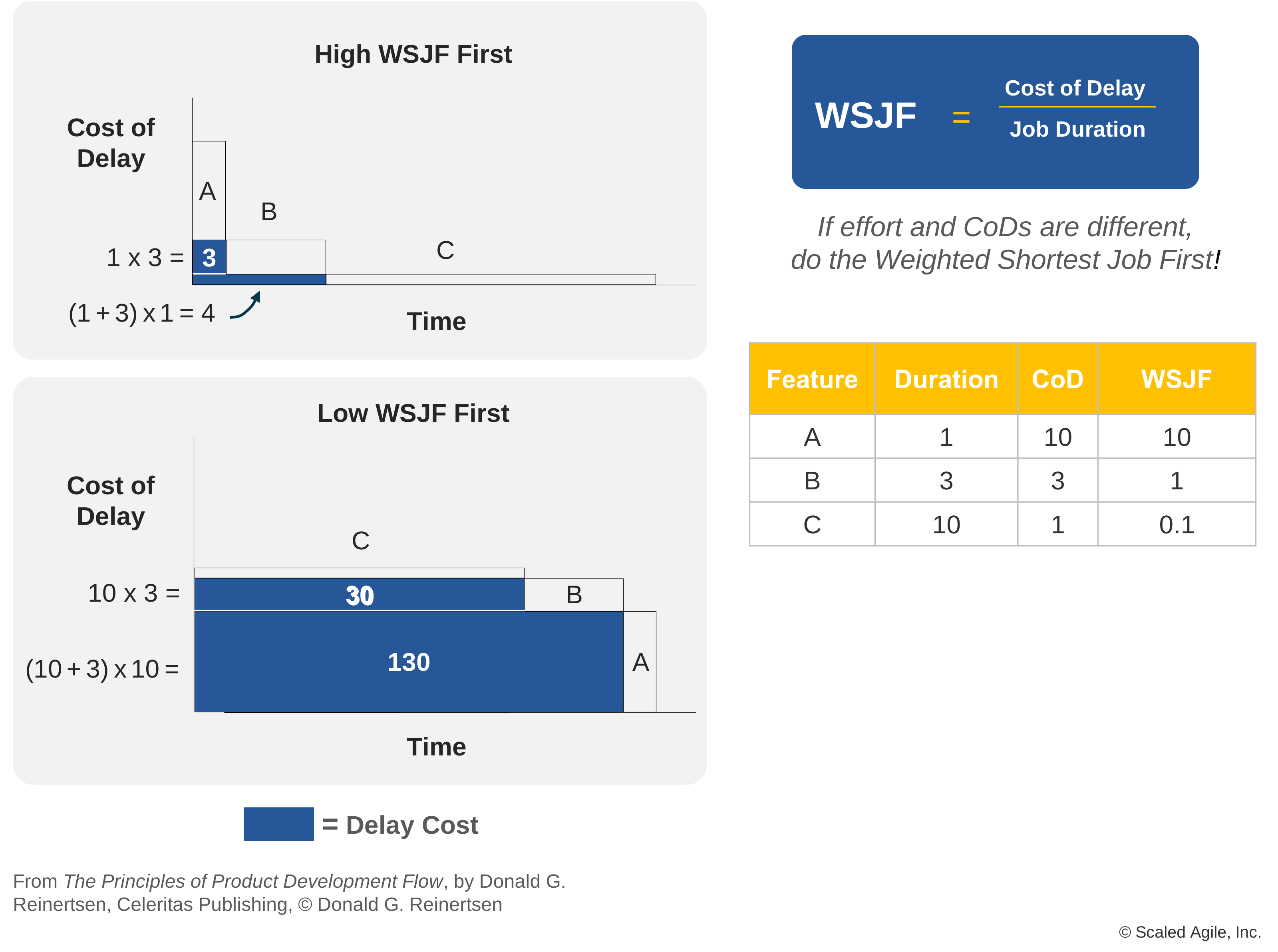
In WSJF, prioritize features by calculating the following formula:
WSJF = Cost of Delay / Job DurationFeatures with a higher WSJF score are prioritized first because they offer the most economic benefit in the shortest amount of time. This ensures that you focus on delivering high-value features quickly, maximizing return on investment and optimizing workflow for faster delivery of impactful work.
Pros
- Balances the importance of delivering value quickly with the effort required
- Fits well with Agile and Lean methodologies, supporting efficient workflows
- Helps focus on features that offer the most financial benefits in the shortest time
Cons
- Needs accurate estimates of both cost and duration, which can be difficult to obtain
- Calculating the cost of delay can be complex and time-consuming
- Might ignore important qualitative factors that are hard to quantify
📘 Try the free WSJF Calculator
Cost of Delay
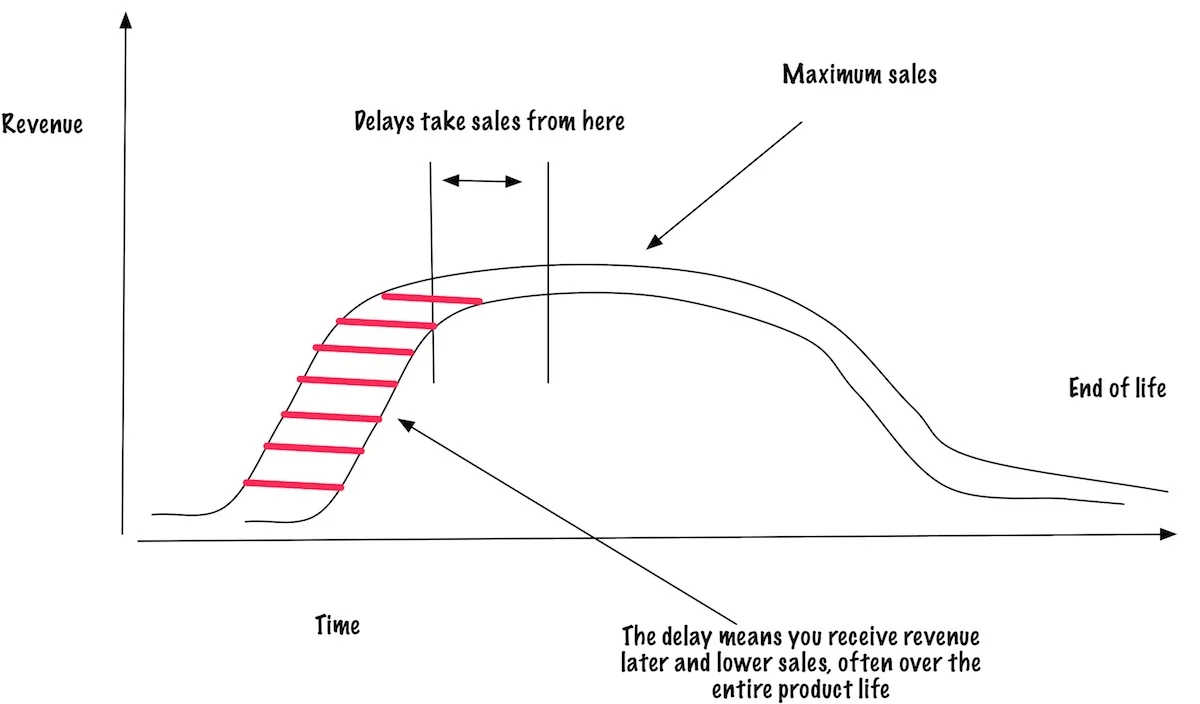
Cost of Delay quantifies the economic impact of delaying a feature, helping prioritize based on the urgency and value of features.
This framework ensures that features with higher economic impact are prioritized to maximize returns, making it essential for projects where timing and financial considerations are critical.
Components
| Component | Description |
|---|---|
| User-Business Value | The value a feature provides to users and the business. |
| Time Criticality | How the value of the feature changes over time. |
| Risk Reduction/Opportunity Enablement | The extent to which the feature reduces risks or enables new opportunities. |
What has higher priority?
In the Cost of Delay framework, calculate the Cost of Delay using:
Cost of Delay = User-Business Value + Time Criticality + Risk Reduction/Opportunity EnablementFeatures with a higher Cost of Delay are given higher priority because delaying them would result in greater economic loss. This ensures that urgent and high-value features are addressed promptly to maximize returns and minimize potential financial setbacks, aligning feature development with business financial goals.
Here is a visual to understand the cost of delay:
Pros
- Focuses on the financial benefits of timely feature delivery
- Encourages prioritizing features that can generate the most revenue or save costs quickly
- Aligns feature development with business financial goals
Cons
- Requires precise financial data, which can be difficult to gather accurately
- Implementing the framework can be complex due to the need for detailed analysis
- Might overlook benefits that are not directly financial, such as improved user satisfaction
Feasibility, Desirability, and Viability Scorecard
The Feasibility, Desirability, and Viability (FDV) scorecard assesses features based on their practicality, user appeal, and business sustainability.
FDV ensures that prioritized features are not only desirable to users but also feasible to implement and viable for the business, promoting balanced and sustainable product development.
Components
| Component | Description |
|---|---|
| Feasibility | The technical and resource capacity to implement the feature. |
| Desirability | How much the feature appeals to users and meets their needs. |
| Viability | The business sustainability and profitability of the feature. |
What has higher priority?
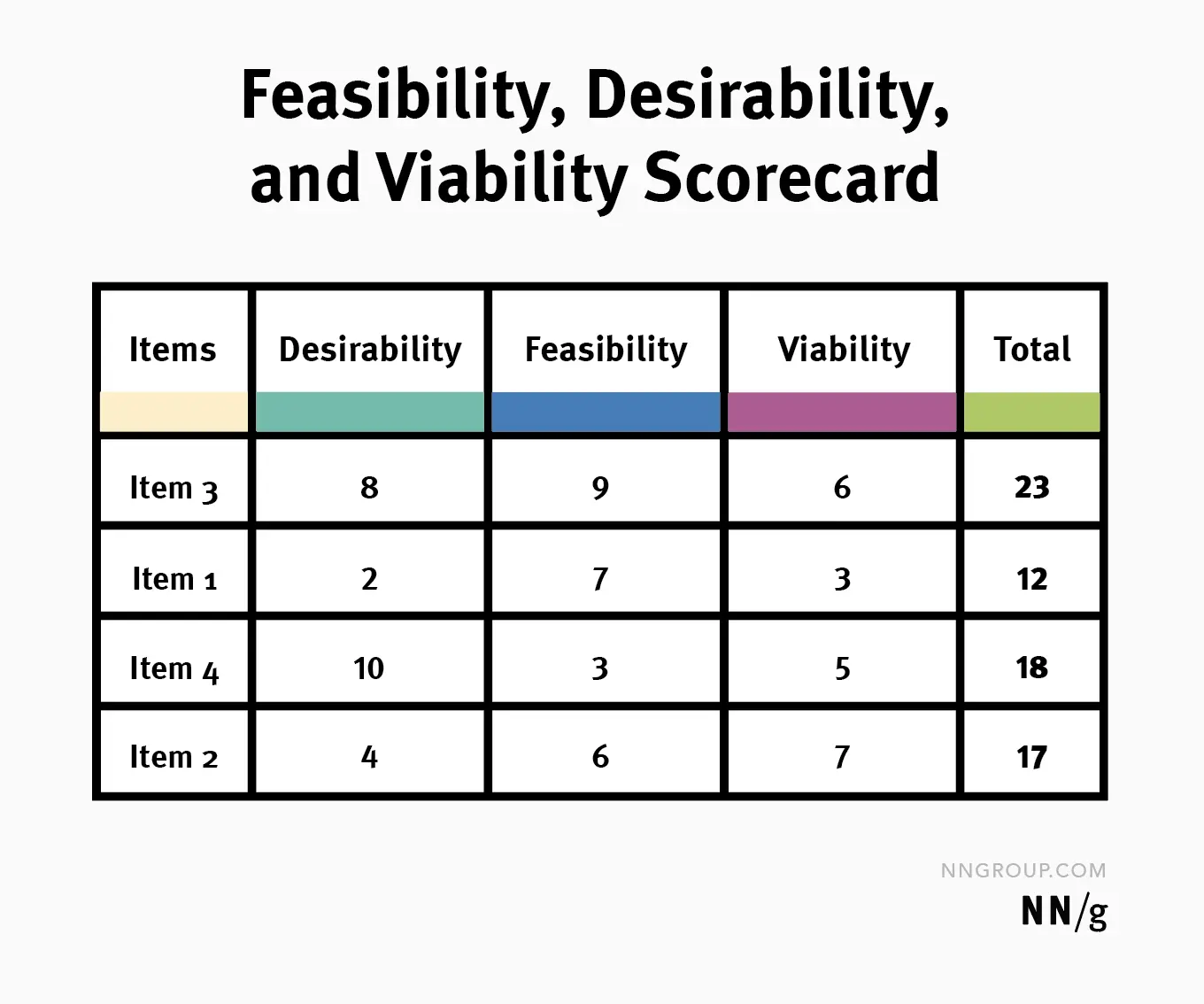
In the Feasibility, Desirability, and Viability (FDV) scorecard, calculate the FDV Score using:
FDV Score = Feasibility × Desirability × ViabilityFeatures with higher FDV scores are prioritized as they are more feasible to implement, more desirable to users, and more viable for the business. This ensures that prioritized features are practical, appealing, and sustainable, promoting balanced and long-term product development.
You can fill in the score card like this:
Pros
- Considers different important aspects, ensuring a well-rounded evaluation
- Balances what users want with what is practical and profitable
- Promotes long-term sustainability by focusing on viable features
Cons
- Scoring can be subjective, leading to inconsistent evaluations
- Requires collaboration across different departments, which can be challenging
- Assessing each component in detail can take a lot of time
When Do You Choose What Framework
Choosing the right prioritization framework depends on your specific project needs, team preferences, and the nature of the features you're evaluating. Below is a quick-reference table, followed by a deeper decision guide.
| Use Case | Recommended Frameworks |
|---|---|
| Quantitative and Objective Evaluation | RICE, ICE Scoring Model, Weighted Scoring Prioritization |
| Understanding Customer Satisfaction | Kano |
| Quick and Simple Prioritization | Impact Effort (Value/Effort), ICE Scoring Model |
| Managing Project Scope and Deadlines | The MoSCoW Method |
| Identifying Unmet Customer Needs | Opportunity Scoring |
| Agile and Lean Environments | WSJF (Weighted Shortest Job First) |
| Financial and Urgency-Based Prioritization | Cost of Delay |
| Ensuring Balanced Product Development | Feasibility, Desirability, and Viability Scorecard |
| Complex Decision-Making with Multiple Criteria | Weighted Scoring Prioritization, RICE |
How to decide: a practical decision guide
The table above gives a quick overview, but in practice the right framework depends on three factors: your team size, the data you have available, and how fast you need to decide.
Start with your team's maturity level:
- Small team, early-stage product (< 10 people): Use Impact Effort or ICE. You don't have the data or the time for complex scoring. These frameworks take minutes to set up and let you move fast. Graduate to RICE once your team grows and you have usage data
- Mid-size team with customer data (10-50 people): Use RICE as your default. You likely have enough usage data to estimate Reach and Impact with confidence. Add Kano surveys periodically to validate that you're building what customers actually want
- Large team with multiple stakeholders (50+ people): Use Weighted Scoring or WSJF. When many departments compete for resources, you need a framework that lets different stakeholders agree on criteria and weights. The structured process also creates an audit trail for decisions
Consider the type of decision:
- Scope a fixed-deadline release → MoSCoW. It forces the "Won't-have" conversation early
- Choose between 20+ feature requests → RICE or Weighted Scoring. You need a numerical ranking
- Evaluate a single high-stakes bet → Cost of Delay + FDV Scorecard. Quantify the downside of waiting and validate feasibility before committing
- Discover what to build next → Kano + Opportunity Scoring. Survey customers first, then score the gaps
When in doubt: Start with RICE. It's the most widely adopted framework in our survey (used by 38% of teams) and strikes the best balance between rigor and speed.
For a deeper dive into choosing the right framework, see our decision guide. For a side-by-side comparison of all frameworks, see the framework comparison table.
My personal favorite frameworks
These are my favorites:
- RICE is ideal when you need a detailed and numerical approach to compare features
- Kano is best used when understanding how features impact customer satisfaction is crucial
- Impact Effort is suitable for quick decisions in fast-paced environments
- The MoSCoW Method helps in scenarios where managing project scope is essential
- WSJF aligns well with Agile teams focusing on maximizing economic benefits
- Cost of Delay is important when financial implications and timing are critical factors
Why is Weighted Scoring Prioritization not a favorite?
This used to be my favorite framework, but I noticed that people often get caught up debating the components and weights itself rather than focusing on actual prioritization. They'd rather challenge the scoring method than reconsider the priority of their preferred items.
Switching to a more widely accepted framework can reduce this friction, as it's less likely to be questioned, allowing everyone to focus more on prioritizing effectively.
Steps to Prioritize
Effectively prioritizing features involves a structured approach to ensure that the most valuable and feasible items are addressed first. Here's a step-by-step process that can be applied to various prioritization frameworks:
1. List Features, Enablers, and Regulatory Items
First things first, make a list of all the tasks and features you're considering. Aim to keep your list MECE (Mutually Exclusive, Collectively Exhaustive). This means your items should not overlap (mutually exclusive) and should cover all possibilities (collectively exhaustive).
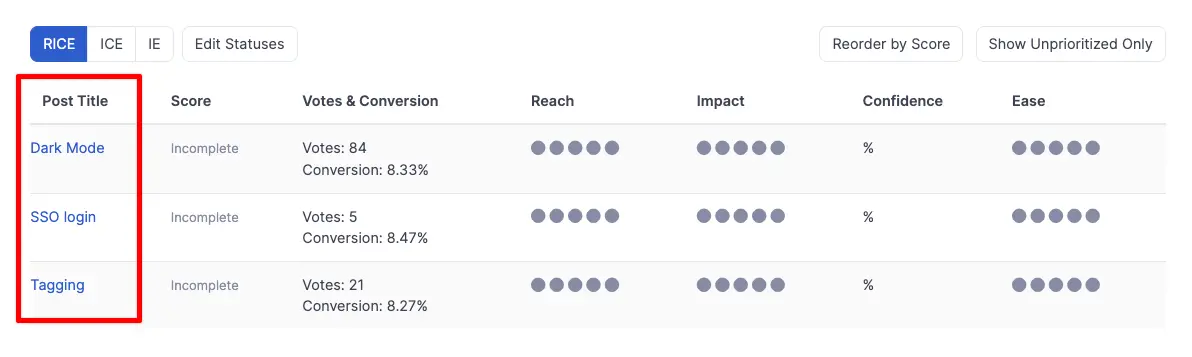
For example, "SSO login" and "Tagging" are on the same level and don't overlap. However, "Change button color" and "Build a whole new app" are definitely not on the same level.
Take your time to create a comprehensive list. It's frustrating to be halfway through prioritizing and have new ideas thrown in unexpectedly. Gather input from customers, partners, and coworkers using surveys or a feedback tool to ensure all relevant ideas are captured.
Let's add the list using RICE in the Score-based Prioritization module:
2. Score Each Component
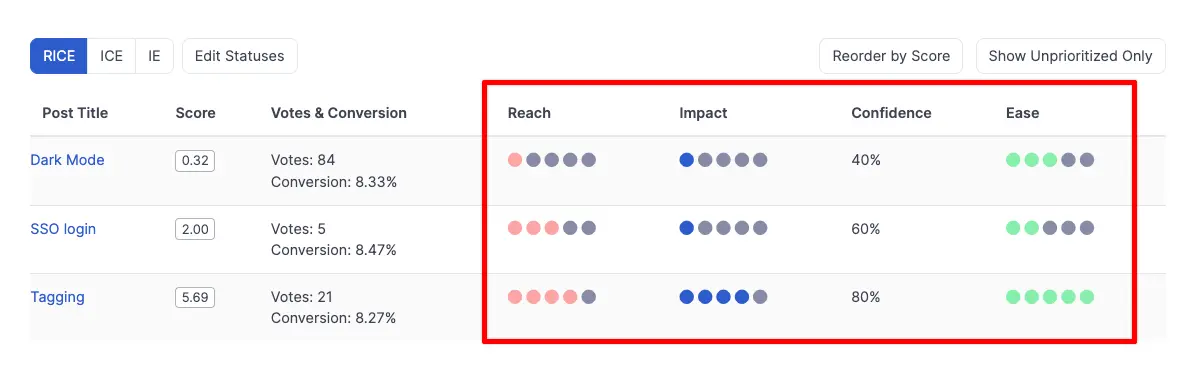
Next, go through your list and score each item based on the criteria of your chosen framework in the prioritization tool. Whether you're using RICE, ICE, MoSCoW, or another method, apply the relevant scales to evaluate each feature.
For example, if using RICE, score each feature on Reach, Impact, Confidence, and Effort. Ensure that each score is consistent and based on agreed-upon definitions to maintain objectivity.
3. Calculate Scores
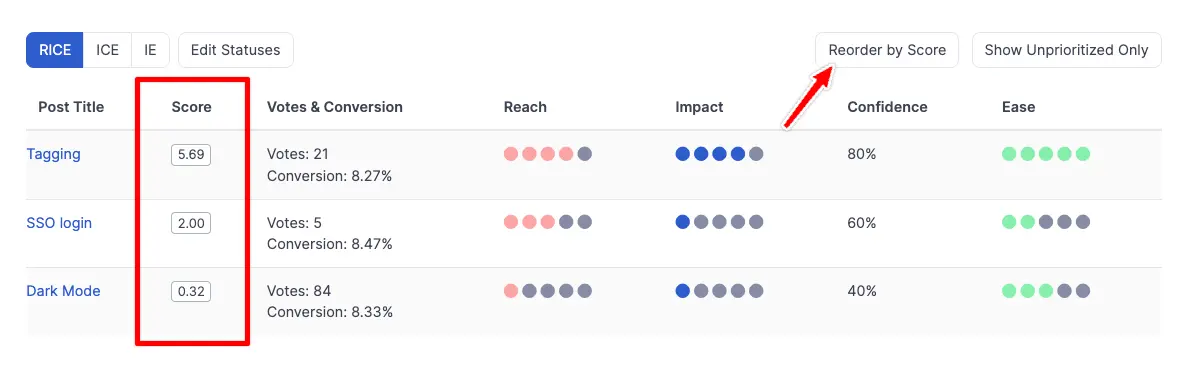
Now it's time to do some math! Apply the formula of your chosen framework to calculate a score that determines the priority of each feature.
For instance, with RICE, the calculation is:
Priority = (Reach × Impact × Confidence) / EffortEnter all the scored data into your chosen tool or spreadsheet, and let it automatically compute the prioritization scores. This will allow you to reorder the list from highest to lowest priority, making it easier to identify which features should be addressed first.
4. Review with Team and Stakeholders
After calculating the scores, it's important to review the results with your team and key stakeholders. This step helps catch any oversights and ensures that everyone is aligned on the priorities. Discuss the rationale behind the scores and make adjustments if necessary to reflect any additional insights or considerations.
5. Finalize and Create Roadmap
Finally, with all the data entered and reviewed, you can use this input to determine your product roadmap. Review each item on the list, finalize the prioritized features, and organize them into your roadmap.
In ProductLift, we can change the status of the items we have reviewed. This step immediately updates users that voted for the feature request.
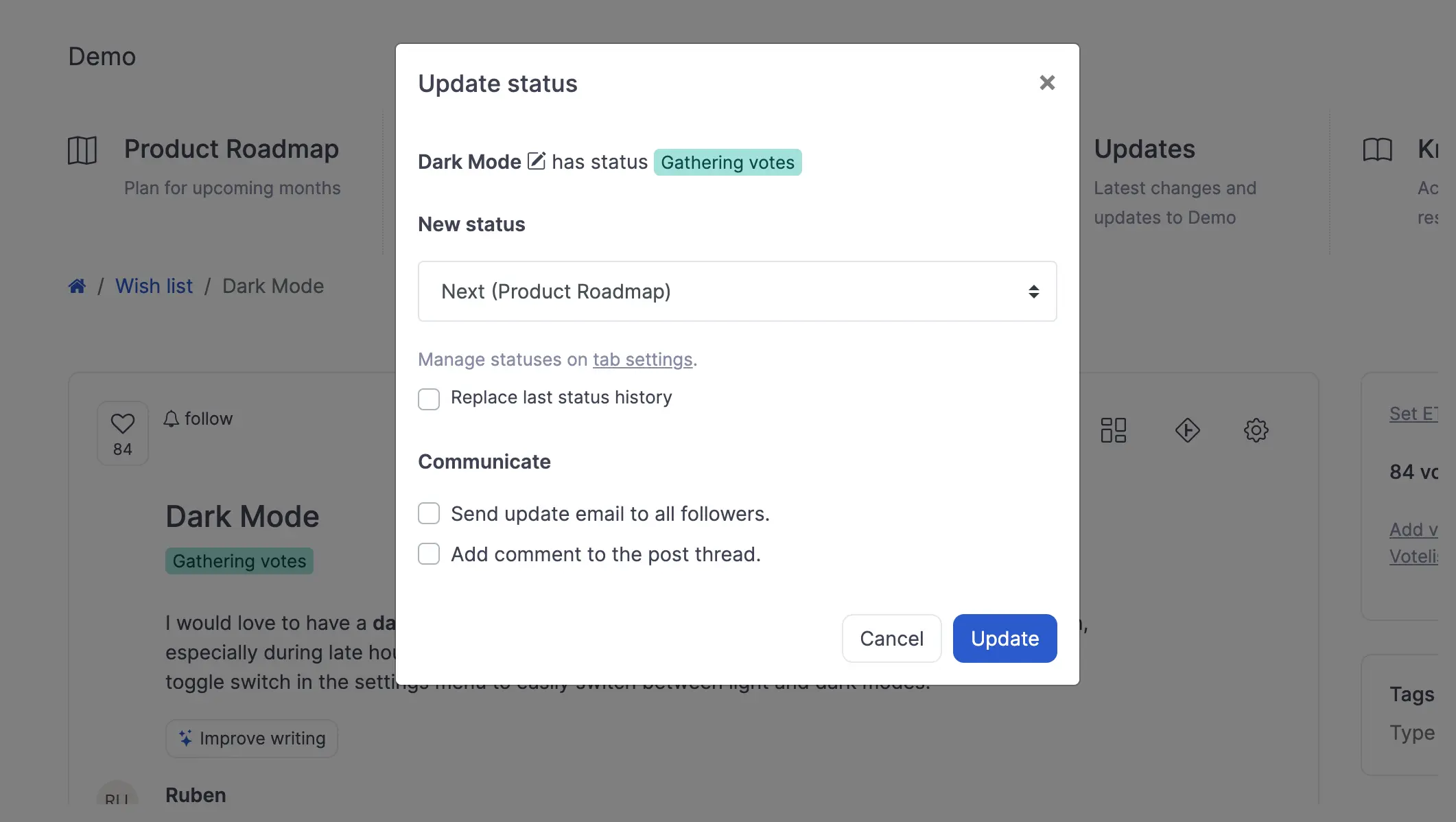
As we update the statuses of the items, they are automatically added to our roadmap. This ensures that your roadmap is always up-to-date with the latest priorities and statuses, guiding your development process effectively.
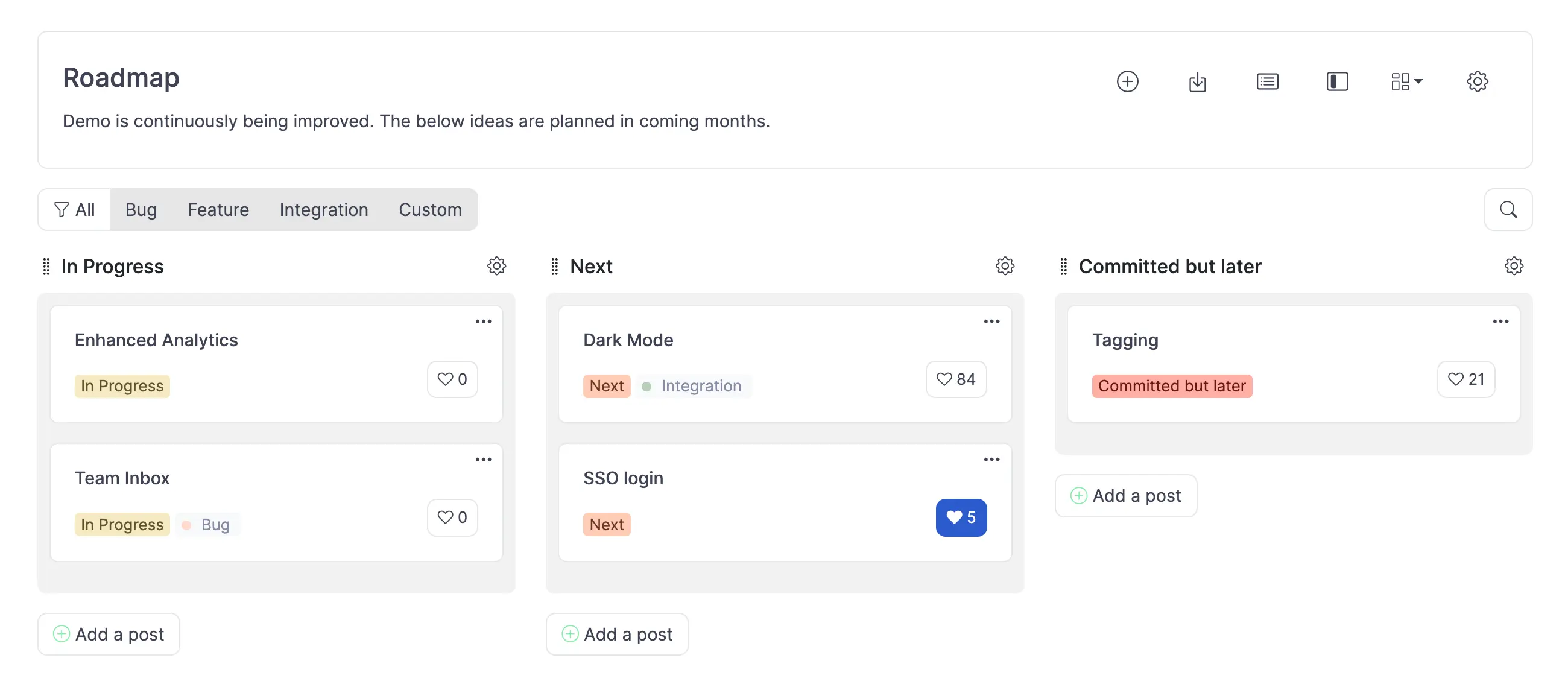
By following these steps, you can ensure a systematic and data-driven approach to feature prioritization, leading to a more effective and aligned product development process.
Common Prioritization Mistakes (And How to Avoid Them)
Even with a solid framework in place, teams often fall into these traps:
1. Letting the HiPPO decide
The Highest Paid Person's Opinion (HiPPO) overrides data-driven scoring. A VP insists their pet feature is top priority, and the team complies regardless of scores. Fix: Make the scoring visible and collaborative. When everyone scores independently before discussion, it's much harder for one voice to dominate.
2. Scoring once and never revisiting
Teams run a prioritization session, create a ranked list, and never update it, even as customer needs shift and market conditions change. Fix: Revisit your prioritization at least once per quarter. Set a recurring calendar event for it.
3. Comparing apples to oranges
Mixing vastly different items in the same prioritization session, like comparing "fix login bug" with "build new analytics dashboard." These aren't on the same level. Fix: Keep your list MECE (Mutually Exclusive, Collectively Exhaustive). Group items by type (bugs, features, enablers) and prioritize within each group, or ensure all items are at a comparable level of effort and scope.
4. Over-engineering the framework
Spending more time debating the weights and criteria of the framework than actually prioritizing. This is especially common with Weighted Scoring. Fix: Start with a simpler framework like RICE or ICE. You can always add complexity later when you have more data to justify it.
5. Ignoring effort entirely
Focusing only on impact and forgetting that some high-impact features take 6 months to build. The result: the roadmap is packed with ambitious projects and nothing ships. Fix: Always include effort/ease as a factor. Frameworks like RICE and ICE have this built in. If using MoSCoW, explicitly discuss effort when categorizing items.
6. Not involving the right people
Product managers prioritize in isolation without input from engineering (on effort estimates), customer success (on customer pain points), or sales (on deal-blocking requests). Fix: Include cross-functional input during the scoring phase. You don't need a committee. A 30-minute async scoring round with 3-4 key people is enough.
Want to see how teams avoid these mistakes in practice? Read our 6 real-world prioritization examples.
FAQ
What is a prioritization framework?
A prioritization framework is a structured method used to evaluate and rank features, projects, or tasks based on specific criteria. It helps product managers and teams make informed decisions by considering factors beyond gut feelings, ensuring that the most valuable and impactful items are prioritized.
https://www.youtube.com/watch?app=desktop&v=b0BCjrHAd5U
What are the three prioritization methods?
Three common prioritization methods are:
- RICE (Reach, Impact, Confidence, Effort): Evaluates features based on their potential reach, impact on goals, confidence in estimates, and the effort required to implement.
- Kano Model: Categorizes features into basic needs, performance needs, and delighters based on customer satisfaction.
- MoSCoW Method (Must-haves, Should-haves, Could-haves, Won't-haves): Divides features into categories to manage project scope and ensure critical features are delivered first.
Why are prioritization frameworks important?
Prioritization frameworks are essential because they help teams make balanced decisions by considering multiple factors simultaneously.
For example, you might have a great feature that promises amazing value for customers but requires two years of effort to develop. Without a framework, you might overlook the significant investment of time and resources needed.
A prioritization framework allows you to weigh such factors, making it possible to decide whether to pursue the large feature or opt for a smaller job that delivers great value more quickly.
This process not only optimizes resource allocation but also sparks meaningful discussions about what truly matters for your product's success.
How do prioritization frameworks improve product development?
Prioritization frameworks provide a clear, objective basis for decision-making, ensuring that resources are allocated to features that offer the most value. This leads to better alignment with business goals, increased customer satisfaction, and more efficient use of time and resources.
Can prioritization frameworks be combined?
Yes, different frameworks can be combined to leverage their unique strengths. For example, you might use the Kano model to understand customer satisfaction and RICE to quantify and rank features based on multiple criteria.
How often should you revisit your prioritization framework?
It's advisable to revisit and adjust your prioritization framework regularly, especially when there are significant changes in market conditions, customer feedback, or business objectives. Regular reviews ensure that your product development prioritization remains aligned with current goals and realities.
What factors should you consider when choosing a prioritization framework?
When choosing a product backlog prioritization framework, consider factors such as the complexity of your projects, the availability of data, team preferences, the need for stakeholder alignment, and the specific goals you aim to achieve with prioritization.
Do all prioritization frameworks require numerical scoring?
No, not all frameworks rely on numerical scoring. Some, like the MoSCoW method, use categorical classifications, while others like the Kano model focus on qualitative assessments based on customer feedback.
How does ProductLift support prioritization frameworks?
ProductLift supports RICE, ICE Scoring, Impact/Effort, WSJF, MoSCoW, Kano and Weighted scoring. Admins can also create multiple custom models with their own criteria, directions and percentage weights.
Use Score ideas for direct backlog scoring, Compare for a configurable visual view, and Team scoring for independent participant scores and rationale. A live workshop lets the team drag ideas, adjust criteria and record one decision together. The result stays connected to customer votes, segments, revenue context and the roadmap.
How can customer feedback influence prioritization?
Customer feedback provides valuable insights into what features are most desired and needed. By incorporating customer feedback into your prioritization framework, you ensure that the features you develop align with user needs and preferences, leading to higher satisfaction and adoption rates.
Ready to apply a framework to a live backlog? Use the ProductLift feature prioritization tool to combine scoring with votes, customer segments, revenue context, and engineering effort.
Last updated on Oct 1, 2026