Product Market Fit is a crucial concept in Saas product management that refers to the stage where a product successfully meets the needs of its target market. It is the alignment between a product's features, benefits, and pricing with the demands and expectations of customers within a specific market segment.
Examples
To understand Product Market Fit better, let's consider a few examples:
-
Slack: Initially, Slack started as an internal communication tool for a gaming company, but it quickly realized the potential to cater to a larger audience. By focusing on enhancing team collaboration and productivity, Slack achieved Product Market Fit by becoming the go-to communication platform for businesses of all sizes.
-
Airbnb: When Airbnb was launched, it struggled to gain traction as a platform connecting travelers with unique accommodations. However, by understanding the needs of budget-conscious travelers looking for a more personalized experience, Airbnb refined its offerings, allowing hosts to rent out spare rooms or even entire properties. This shift led to massive growth and the achievement of Product Market Fit.
Importance
Product Market Fit is vital for the success and sustainability of any Saas product. Here's why:
-
Customer Satisfaction: When a product truly fits the market, it addresses the pain points and fulfills the desires of customers, leading to higher satisfaction levels.
-
Market Differentiation: Product Market Fit helps a Saas product stand out from competitors by offering unique value and meeting specific market needs.
-
Revenue Generation: A well-fitted product attracts more customers, increases customer retention, and drives revenue growth, ensuring the financial success of the company.
How to Use Product Market Fit
Achieving Product Market Fit requires careful analysis, iteration, and customer-centricity. Here are some steps to guide you towards achieving it:
-
Identify the Target Market: Clearly define and understand the specific segment of customers you want to serve. Conduct market research, gather data, and identify their pain points and needs.
-
Develop and Test the Product: Build an initial version of your product that addresses the identified market needs. Collect feedback from potential customers, iterate, and refine the product based on their input.
-
Measure and Analyze: Define metrics and key performance indicators (KPIs) to evaluate the product's adoption, usage, and customer satisfaction. Continuously measure and analyze the data to identify areas for improvement.
-
Iterate and Refine: Based on the data and feedback gathered, make necessary iterations to improve the product, aligning it more closely with the target market's preferences and requirements.
-
Validate with Early Customers: Engage with early adopters who fit your target market. Their feedback and satisfaction will help validate whether your product is achieving Product Market Fit.
Useful Tips for Product Market Fit
Consider these tips to enhance your chances of achieving Product Market Fit:
-
Continuously Communicate with Customers: Engage in regular conversations with your customers to understand their evolving needs and pain points. This direct feedback is invaluable in refining your product and maintaining its market fit.
-
Focus on Core Value Proposition: Identify the core value proposition your product offers and ensure it remains strong throughout iterations. Avoid feature bloat and stay focused on solving the most critical customer problems.
-
Stay Agile and Adaptive: The market is dynamic, and customer needs can change rapidly. Stay agile, adapt to market shifts, and be ready to make adjustments to your product strategy and roadmap accordingly.
-
Empathize with Your Customers: Put yourself in the shoes of your target customers. Understand their challenges, motivations, and goals. This empathy will guide you in creating a product that truly resonates with them.
FAQ
What is product-market fit?
Why is product-market fit important?
How can I measure product-market fit?
What are the signs of achieving product-market fit?
What should I do if my product doesn't have product-market fit?
Can product-market fit change over time?
How long does it take to achieve product-market fit?
What role does customer feedback play in achieving product-market fit?
Is product-market fit a one-time achievement?
Can a product have multiple product-market fits?
The faster, easier way to capture user feedback at scale
Join over 5,204 product managers and see how easy it is to build products people love.





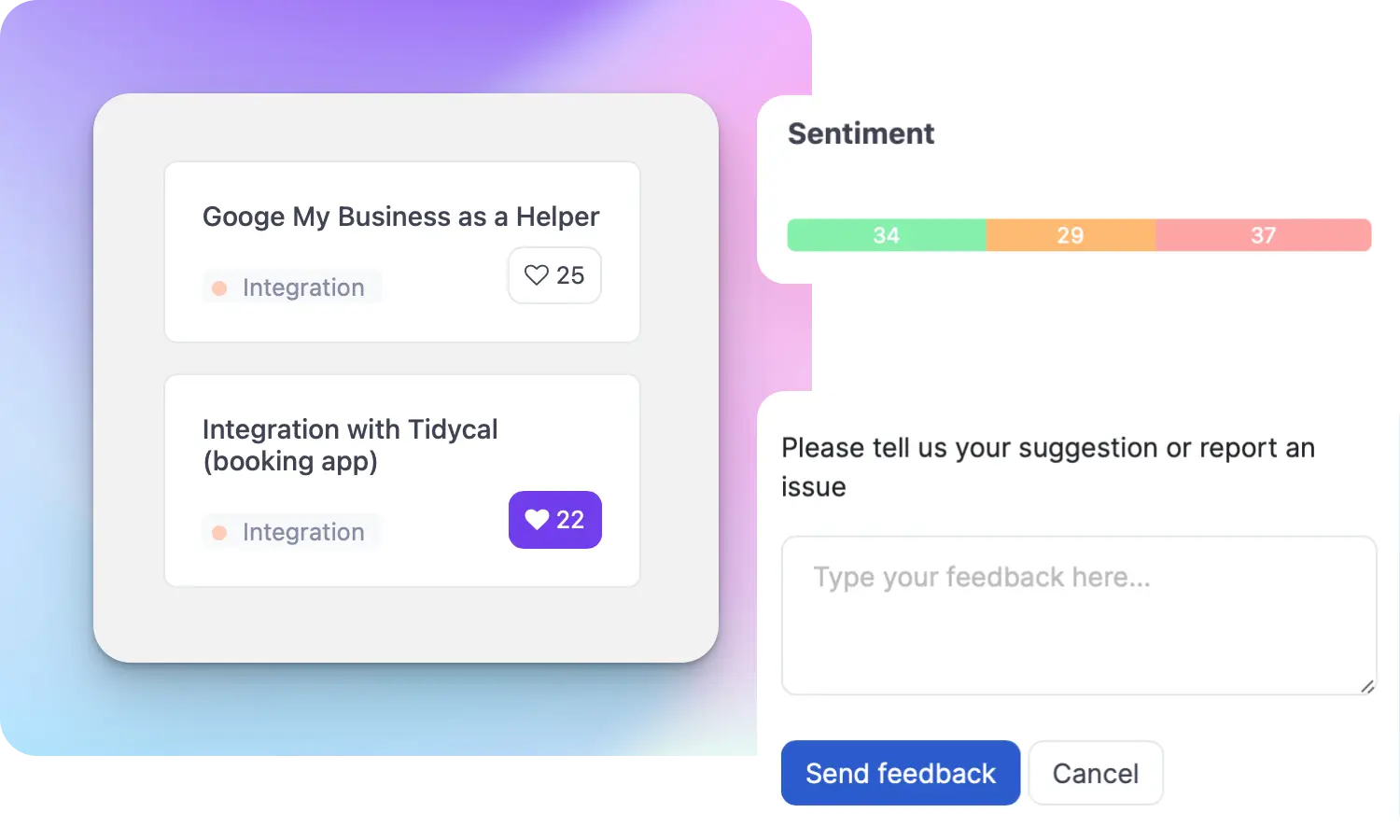
Did you know 80% of software features are rarely or never used? That's a lot of wasted effort.
SaaS software companies spend billions on unused features. In 2025, it was $29.5 billion.
We saw this problem and decided to do something about it. Product teams needed a better way to decide what to build.
That's why we created ProductLift - to put all feedback in one place, helping teams easily see what features matter most.
In the last five years, we've helped over 5,204 product teams (like yours) double feature adoption and halve the costs. I'd love for you to give it a try.

Ruben Buijs
Founder & Digital Consultant