Examples:
- Dropbox: The founder of Dropbox, Drew Houston, started with a simple video explaining the product concept instead of investing in developing the entire product. This allowed him to test the market demand before spending valuable resources.
- Airbnb: The founders of Airbnb started by renting out air mattresses in their apartment to test the idea of providing accommodations to travelers. This lean approach helped them validate the market and gather feedback before building a full-fledged platform.
Importance:
Lean Startup is a methodology that aims to reduce waste and increase the chances of building a successful product by validating assumptions early in the product development process. It emphasizes a scientific approach to entrepreneurship, where hypotheses are tested and validated or invalidated through continuous experimentation.
How to use it:
- Build-Measure-Learn: The core principle of Lean Startup is to iterate quickly by following the Build-Measure-Learn feedback loop. Start by building the minimum viable product (MVP) that allows you to test your assumptions and gather feedback from real users. Measure the results and learn from them to inform the next iteration.
- Validated Learning: Focus on learning from the feedback received during the experimentation process. This helps you gain insights into customer needs, preferences, and behaviors, enabling you to make data-driven decisions and iterate your product accordingly.
- Pivot or Persevere: Based on the insights gained from the feedback loop, be open to making changes to your product, business model, or target audience. If the assumptions are invalidated, pivot and make necessary adjustments. If the feedback confirms your hypotheses, persevere and continue to refine and expand your product.
Useful Tips:
- Start with a problem: Identify a significant pain point or problem faced by your target audience. This ensures you are building something that solves a real need.
- Rapid experimentation: Conduct small-scale experiments to validate or invalidate your assumptions quickly. This helps you avoid wasting time and resources on ideas that may not work.
- Continuous customer feedback: Actively seek feedback from your target customers throughout the product development process. This helps you understand their needs and preferences better.
- Embrace failure: Failure is an inevitable part of the startup journey. Learn from failures and use them as opportunities to iterate and improve your product.
Related Terms:
- Minimum Viable Product (MVP)
- Product-Market Fit
- Customer Development
- Agile Development
- A/B Testing
- Business Model Canvas
- Customer Persona
- Growth Hacking
- User-Centered Design
FAQ
What is Lean Startup?
What are the key principles of Lean Startup?
What is validated learning?
What is an MVP?
What is the build-measure-learn feedback loop?
How does Lean Startup help in reducing waste?
What is the role of pivoting in Lean Startup?
How does Lean Startup encourage customer-centricity?
What are some common challenges in implementing Lean Startup?
Is Lean Startup only applicable to startups?
The faster, easier way to capture user feedback at scale
Join over 5,204 product managers and see how easy it is to build products people love.





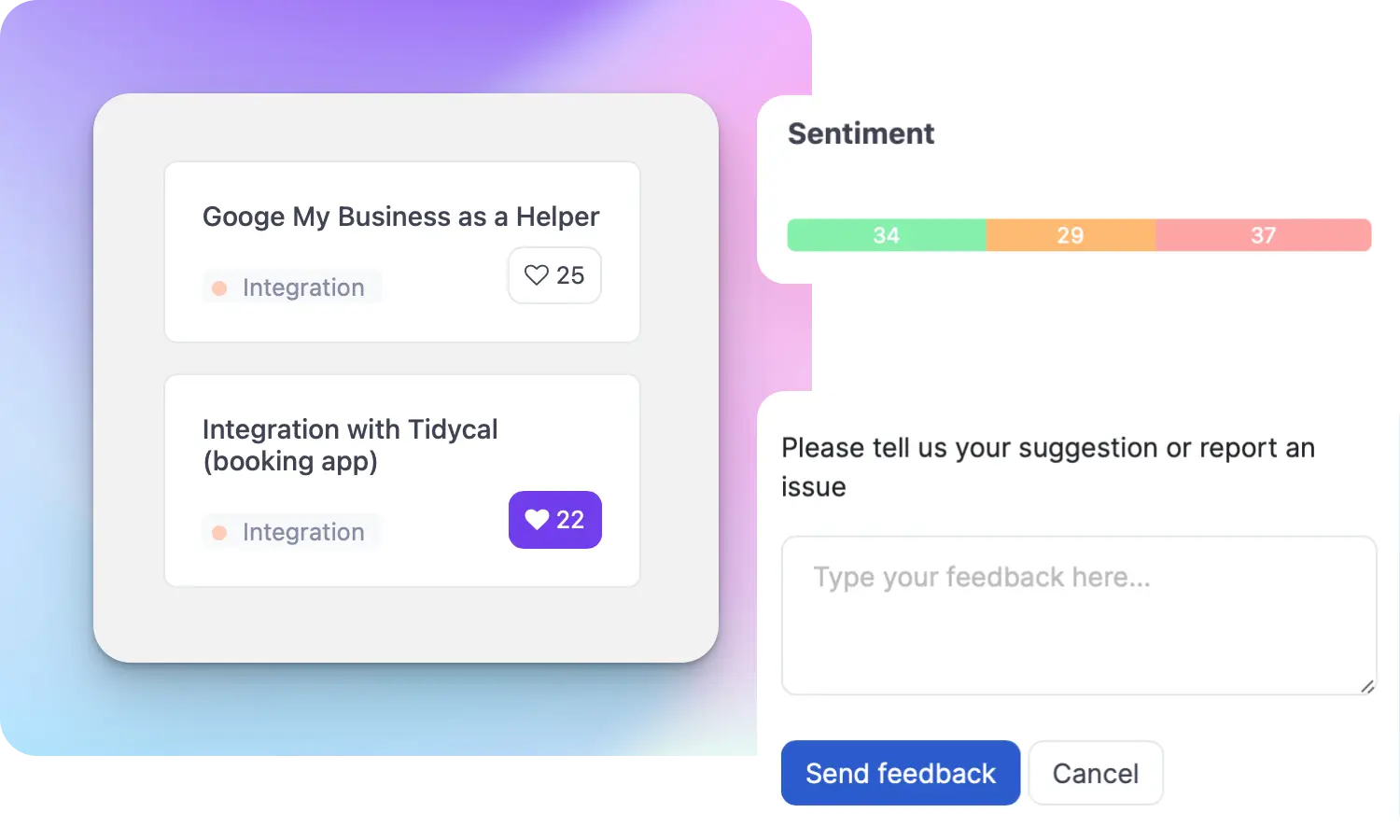
Did you know 80% of software features are rarely or never used? That's a lot of wasted effort.
SaaS software companies spend billions on unused features. In 2025, it was $29.5 billion.
We saw this problem and decided to do something about it. Product teams needed a better way to decide what to build.
That's why we created ProductLift - to put all feedback in one place, helping teams easily see what features matter most.
In the last five years, we've helped over 5,204 product teams (like yours) double feature adoption and halve the costs. I'd love for you to give it a try.

Ruben Buijs
Founder & Digital Consultant