User-Centered Design (UCD) is an approach to product development that prioritizes the needs and preferences of the end-users throughout the design process. It involves understanding the users' behaviors, goals, and motivations to create intuitive and user-friendly products. UCD emphasizes iterative testing and feedback from users to ensure that the final product meets their expectations.
Importance of User-Centered Design
User-Centered Design is crucial for the success of any product. By focusing on the users' needs and preferences, UCD helps in creating products that are more intuitive, efficient, and enjoyable to use. It reduces the risk of developing features that users find confusing or irrelevant, ultimately leading to higher user satisfaction and increased adoption rates.
How to Use User-Centered Design
-
User Research: Start by conducting user research to understand the target audience. This may involve interviews, surveys, observation, or usability testing. Gather insights about their goals, preferences, and pain points.
-
User Personas: Create user personas, which are fictional characters representing different user types. These personas help in visualizing and understanding the target users, enabling the design team to empathize with their needs and make informed design decisions.
-
Iterative Design: Adopt an iterative design approach, where you continuously refine and improve the product based on user feedback. This can involve creating wireframes, prototypes, and conducting usability tests at various stages of the design process.
-
Usability Testing: Regularly test your product with real users to identify usability issues and gather feedback. This can be done through moderated or unmoderated testing sessions, eye-tracking studies, or remote usability testing.
-
Data Analysis: Analyze the data collected from user research and usability testing to identify patterns and trends. Use this information to make data-driven design decisions and iteratively improve the product.
Useful Tips for User-Centered Design
- Involve users throughout the design process to ensure their needs are met.
- Keep the user interface simple and intuitive, avoiding unnecessary complexity.
- Prioritize accessibility to make the product usable by a wide range of users.
- Conduct usability tests with representative users to catch usability issues early on.
- Continuously gather user feedback and iterate the design based on their needs.
Examples of User-Centered Design
-
Apple's iPhone: The iPhone revolutionized the smartphone industry by focusing on simplicity and ease of use. Its intuitive interface, minimalist design, and user-friendly features made it a hit among a wide range of users.
-
Google Search: Google's search engine is designed with a user-centered approach, providing users with relevant and accurate search results. The simple and minimalist design allows users to easily find the information they are looking for.
-
Slack: Slack, a team communication platform, was designed with user-centricity in mind. It offers a clean and intuitive interface, customizable features, and seamless collaboration, making it a popular choice among teams.
FAQ
What is user-centered design?
Why is user-centered design important?
How does user-centered design differ from other design approaches?
What are the key steps in user-centered design?
What are the benefits of conducting user research?
How can user personas be useful in user-centered design?
What is the role of usability testing in user-centered design?
How does user-centered design contribute to business success?
What are some common challenges in implementing user-centered design?
Can user-centered design be applied to existing products?
The faster, easier way to capture user feedback at scale
Join over 5,204 product managers and see how easy it is to build products people love.





Did you know 80% of software features are rarely or never used? That's a lot of wasted effort.
SaaS software companies spend billions on unused features. In 2025, it was $29.5 billion.
We saw this problem and decided to do something about it. Product teams needed a better way to decide what to build.
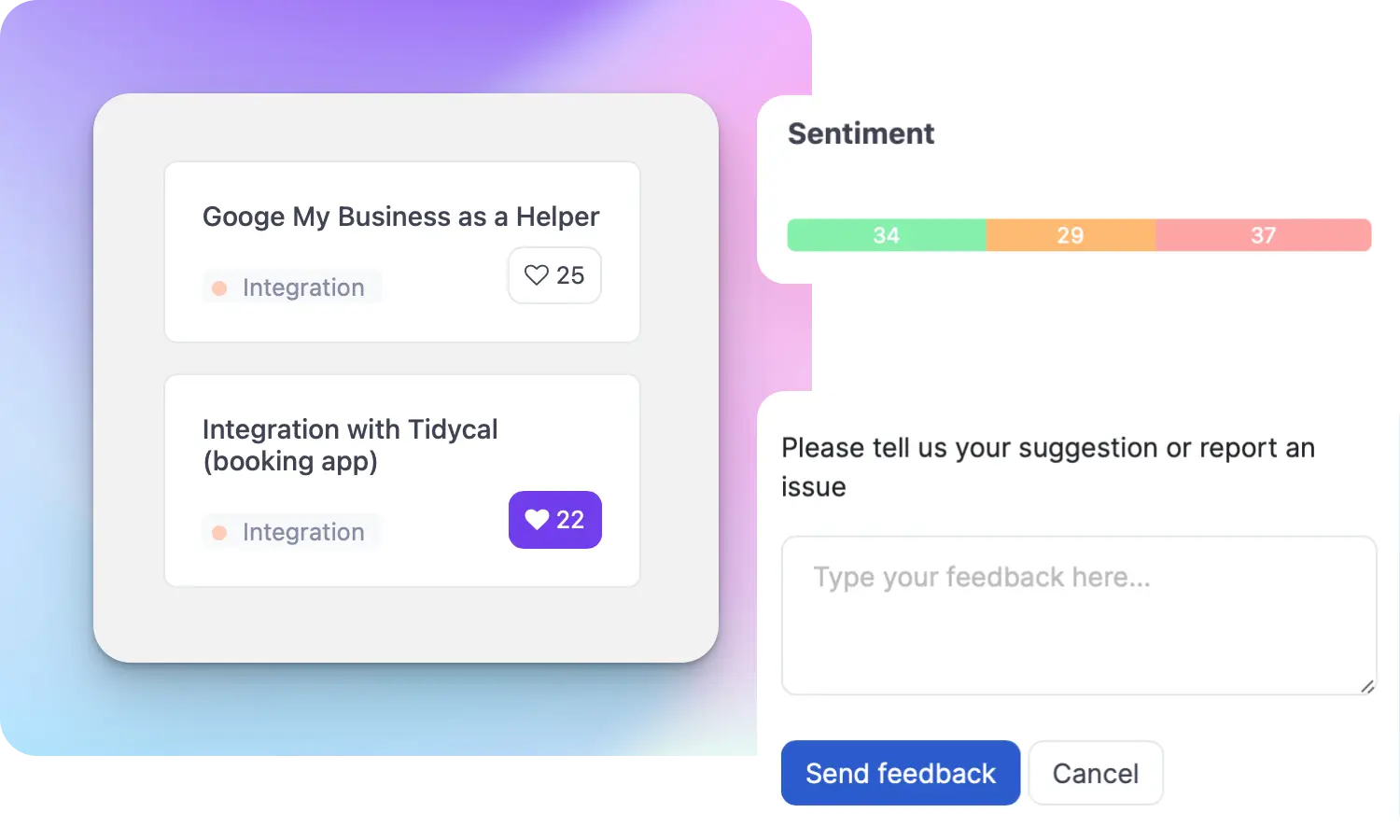
That's why we created ProductLift - to put all feedback in one place, helping teams easily see what features matter most.
In the last five years, we've helped over 5,204 product teams (like yours) double feature adoption and halve the costs. I'd love for you to give it a try.

Ruben Buijs
Founder & Digital Consultant