Objectives and Key Results (OKRs) is a goal-setting framework that helps teams and individuals align their efforts towards achieving specific outcomes. It provides a clear and measurable way to define and track objectives, as well as the key results that indicate progress towards those objectives. OKRs are commonly used in product management to drive focus, prioritize work, and foster a culture of accountability and transparency.
Examples
-
Objective: Increase user engagement.
- Key Result 1: Increase daily active users by 20%.
- Key Result 2: Increase average session duration by 15%.
- Key Result 3: Achieve a Net Promoter Score (NPS) of 9 or above.
-
Objective: Improve product quality.
- Key Result 1: Reduce the number of bugs reported by customers by 50%.
- Key Result 2: Achieve a customer satisfaction rating of 4.5 out of 5.
- Key Result 3: Decrease average response time to customer support tickets by 30%.
Importance
OKRs are important because they provide a framework for setting ambitious but achievable goals. They help teams and individuals focus their efforts on what truly matters and avoid getting lost in day-to-day tasks. By defining measurable key results, OKRs provide a way to track progress and ensure alignment towards the desired outcomes. OKRs also promote transparency and accountability, as they are often shared and reviewed with stakeholders, fostering a collaborative and results-driven culture.
How to Use Objectives and Key Results
-
Define clear objectives: Start by identifying the desired outcomes you want to achieve. Objectives should be inspiring, specific, and time-bound. They should answer the question, "What do we want to accomplish?"
-
Determine measurable key results: Once you have defined your objectives, identify key results that indicate progress towards those objectives. Key results should be measurable, achievable, and push you outside your comfort zone. They should answer the question, "How will we know if we are making progress?"
-
Set ambitious targets: OKRs are not about incremental improvements, but rather about setting ambitious targets that drive growth and innovation. Aim for objectives that require effort and stretch your capabilities.
-
Cascade OKRs: OKRs should be cascaded throughout the organization, ensuring alignment from top to bottom. Each team and individual should have their own OKRs that contribute to the overall company objectives. This alignment ensures that everyone is working towards the same goals.
-
Track progress and provide feedback: Regularly track progress towards your key results and provide feedback. This can be done through weekly or monthly check-ins, where you review progress, discuss challenges, and make adjustments if needed. Celebrate achievements and learn from failures along the way.
Useful Tips
-
Keep it simple: Avoid setting too many objectives or key results. Focus on a few high-priority goals to maintain clarity and prevent dilution of efforts.
-
Make it measurable: Ensure that your key results are measurable and have a clear target. This allows you to track progress objectively and provides a basis for evaluation.
-
Be transparent: Share your OKRs with relevant stakeholders to foster transparency and alignment. This encourages collaboration and helps create a culture of shared responsibility.
-
Embrace stretch goals: Don't be afraid to set ambitious goals that push the boundaries. OKRs are designed to challenge and inspire, so aim high to foster innovation and growth.
-
Iterate and adapt: OKRs are not set in stone. Regularly review and adjust your objectives and key results based on changing circumstances or new insights. Flexibility and adaptation are key to success.
FAQ
What are Objectives and Key Results (OKRs)?
How do Objectives and Key Results work?
What is the purpose of using OKRs?
Who can use Objectives and Key Results?
How often should OKRs be set?
What makes a good Objective?
What makes a good Key Result?
How do you track progress on OKRs?
What happens if Key Results are not achieved?
Can OKRs be changed or modified during the quarter?
The faster, easier way to capture user feedback at scale
Join over 5,204 product managers and see how easy it is to build products people love.





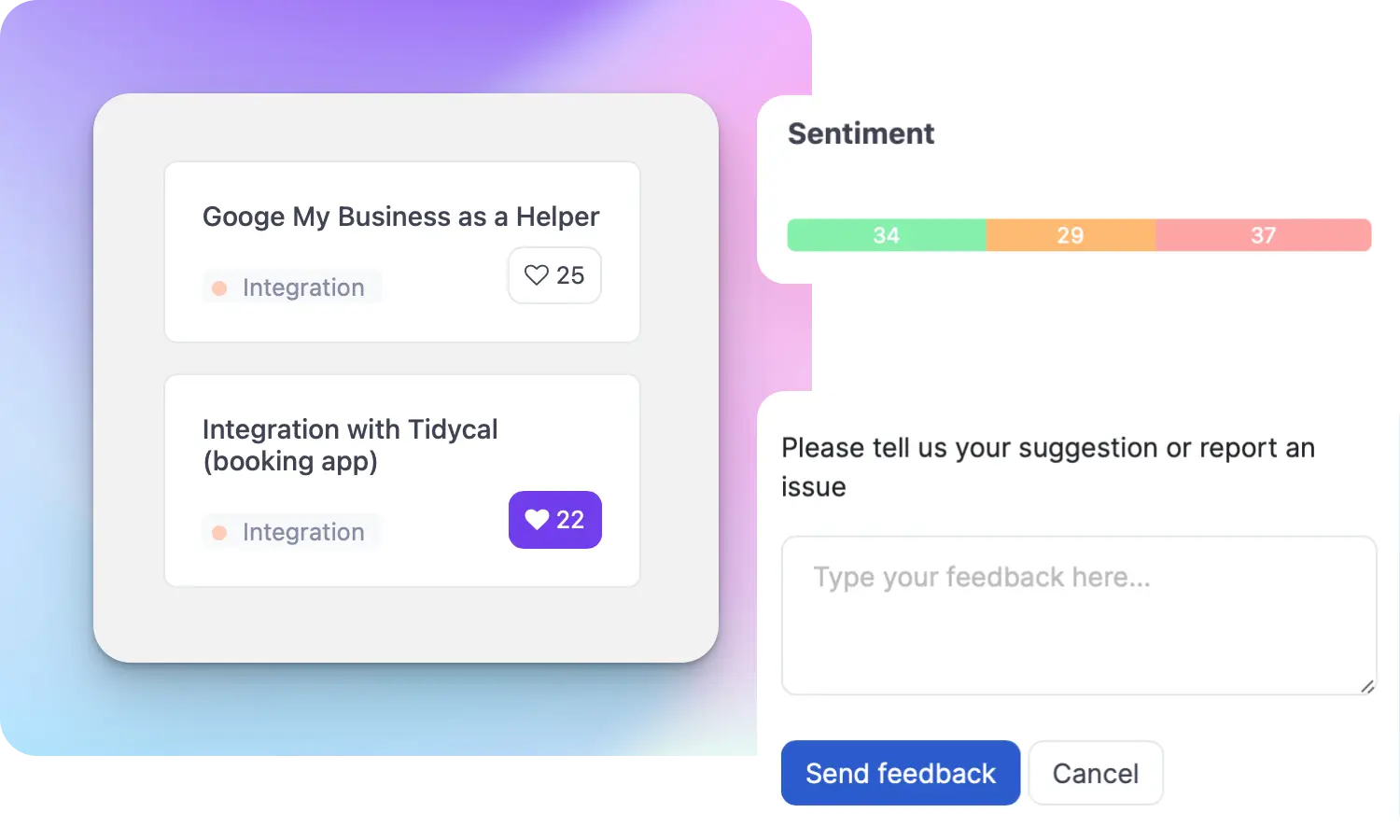
Did you know 80% of software features are rarely or never used? That's a lot of wasted effort.
SaaS software companies spend billions on unused features. In 2025, it was $29.5 billion.
We saw this problem and decided to do something about it. Product teams needed a better way to decide what to build.
That's why we created ProductLift - to put all feedback in one place, helping teams easily see what features matter most.
In the last five years, we've helped over 5,204 product teams (like yours) double feature adoption and halve the costs. I'd love for you to give it a try.

Ruben Buijs
Founder & Digital Consultant