Lifetime Value, often abbreviated as LTV, is a crucial metric in product management that measures the total worth a customer brings to a business throughout their entire relationship. It helps determine the profitability of acquiring and retaining customers, making it an essential tool for making strategic decisions and optimizing business growth.
Examples
Let's say you own an e-commerce business selling high-quality sneakers. By analyzing the lifetime value of your customers, you discover that on average, a customer spends $100 per purchase and makes three purchases annually. Additionally, the average customer remains loyal to your brand for five years. This information allows you to calculate the lifetime value of a customer, which in this case would be $100 x 3 purchases x 5 years = $1,500.
Importance
Understanding the lifetime value of your customers is vital for several reasons. Firstly, it helps determine the return on investment (ROI) of customer acquisition efforts. If the cost of acquiring a customer is higher than their lifetime value, it may indicate the need to reassess marketing strategies or focus on customer retention.
Secondly, lifetime value provides insights into customer behavior and preferences, enabling businesses to tailor their products and services to meet their customers' needs more effectively. By identifying high-value customers, companies can provide personalized experiences and targeted marketing campaigns to maximize their lifetime value.
How to Use It
To calculate the lifetime value of your customers, follow these steps:
- Determine the average purchase value: Calculate the average amount a customer spends per purchase.
- Calculate the purchase frequency: Determine how often, on average, a customer makes a purchase within a specific time frame.
- Estimate the customer lifespan: Identify the average duration a customer remains engaged with your business.
- Multiply the three values: Multiply the average purchase value, purchase frequency, and customer lifespan to obtain the lifetime value.
Once you have calculated the lifetime value, you can use it to make informed decisions, such as setting customer acquisition budgets, optimizing marketing strategies, and identifying opportunities for upselling or cross-selling.
Useful Tips
Here are some useful tips to consider when leveraging lifetime value:
- Focus on customer retention: By retaining existing customers and increasing their lifetime value, you can boost overall profitability.
- Invest in customer experience: Providing exceptional customer service and delivering personalized experiences can enhance customer loyalty and increase their lifetime value.
- Continuously monitor and analyze: Regularly track and analyze your customers' behavior and purchasing patterns to identify any changes or trends that may impact their lifetime value.
- Segment your customers: Group your customers based on their lifetime value and tailor your marketing strategies accordingly. This allows you to allocate resources more efficiently and provide tailored experiences to high-value customers.
FAQ
What is Lifetime Value?
Why is Lifetime Value important for product management?
How can I calculate Lifetime Value?
What factors can influence Lifetime Value?
What are some strategies to increase Lifetime Value?
How can Lifetime Value help with customer segmentation?
Can Lifetime Value be negative?
Is Lifetime Value the same as customer lifetime?
How can I optimize Lifetime Value?
What are some limitations of Lifetime Value?
The faster, easier way to capture user feedback at scale
Join over 5,204 product managers and see how easy it is to build products people love.





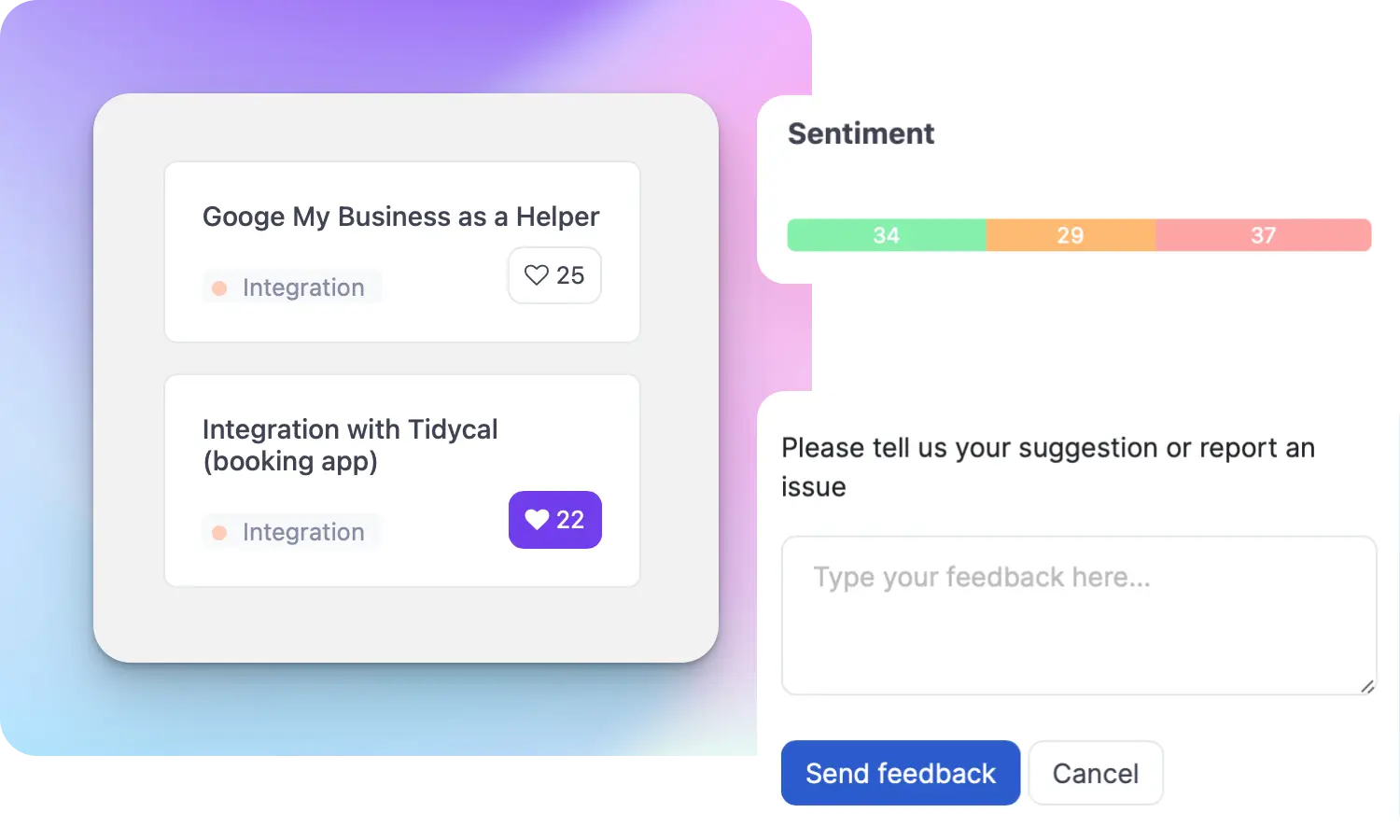
Did you know 80% of software features are rarely or never used? That's a lot of wasted effort.
SaaS software companies spend billions on unused features. In 2025, it was $29.5 billion.
We saw this problem and decided to do something about it. Product teams needed a better way to decide what to build.
That's why we created ProductLift - to put all feedback in one place, helping teams easily see what features matter most.
In the last five years, we've helped over 5,204 product teams (like yours) double feature adoption and halve the costs. I'd love for you to give it a try.

Ruben Buijs
Founder & Digital Consultant