What Is a Feature? Definition and Examples
 Ruben Buijs
Updated Oct 23, 2024
2 min read
A feature is a distinct functionality or characteristic of a product that provides value to the user. It refers to a specific aspect or capability that is designed to meet a user's needs or solve a particular problem. Features can vary in complexity, size, and scope, ranging from simple elements to more comprehensive functionalities within a product.
Examples
- In a messaging app, a feature could be the ability to send and receive messages in real-time.
- A photo editing software may include features such as filters, cropping tools, or red-eye removal.
- An e-commerce website might have features like a shopping cart, product recommendations, or a secure payment system.
Want to organize and prioritize your product features more effectively? ProductLift helps you manage features and gather user feedback effortlessly. Get started for free.
Importance
Features play a crucial role in product management as they directly impact the user experience and the overall success of a product. They are the building blocks that differentiate a product from its competitors and fulfill the needs and desires of the target audience. By incorporating valuable and well-designed features, product managers can attract and retain users, enhance customer satisfaction, and drive business growth.
Feature Owners
A Feature Owner is responsible for the end-to-end development and success of individual features within a product. Their focus is on ensuring specific features deliver value, meet user needs, and align with product goals. They prioritize feature requirements, collaborate with development teams, and monitor performance to make iterative improvements. Feature Owners typically handle smaller, focused scopes of responsibility within a broader product.
How to Use It
When considering features for a product, it is essential to align them with the overall product strategy and the needs of the target market. Here's how to effectively use features in product management:
- Identify user needs: Conduct thorough research to understand your target users, their pain points, and the problems they want to solve.
- Prioritize features: Evaluate the potential impact and feasibility of each feature, and prioritize them based on user needs, business goals, and available resources. Managing a complex set of features can be challenging. ProductLift simplifies this by helping you prioritize and keep track of the most impactful ones. Learn more.
- Define requirements: Clearly define the functionality, design, and specifications of each feature to ensure a shared understanding among the development team.
- Develop and test: Work closely with the development team to build and test each feature, ensuring they meet user expectations and perform as intended.
- Monitor and iterate: Continuously gather feedback, analyze user data, and make improvements to existing features based on user insights and market trends.
Useful Tips
- Keep features focused and avoid feature bloat. Prioritize quality over quantity to maintain a streamlined and user-friendly product.
- Regularly communicate with stakeholders, including users, team members, and executives, to ensure the features align with their expectations and business objectives.
- Conduct user testing and gather feedback early in the development process to validate and refine features before investing significant resources.
- Monitor and analyze metrics related to feature usage, adoption, and user satisfaction to guide decision-making and prioritize future enhancements.
Need a tool to collect and analyze feedback from users on your product features? ProductLift offers seamless integration for gathering insights directly from your users. Sign up for free and start refining your product features today.
FAQ
What is a feature?
Why are features important in product management?
How are features different from products?
What are the different types of features?
How do product managers prioritize features?
Can features be added or removed after a product launch?
What is feature creep?
How can product managers avoid feature creep?
What is a minimum viable product (MVP)?
How can product managers gather feedback on features?
What is the definition of feature?
What is an example of a feature?
What is considered a feature?
What makes something a feature?
The faster, easier way to capture user feedback at scale
Join over 5,204 product managers and see how easy it is to build products people love.





Did you know 80% of software features are rarely or never used? That's a lot of wasted effort.
SaaS software companies spend billions on unused features. In 2025, it was $29.5 billion.
We saw this problem and decided to do something about it. Product teams needed a better way to decide what to build.
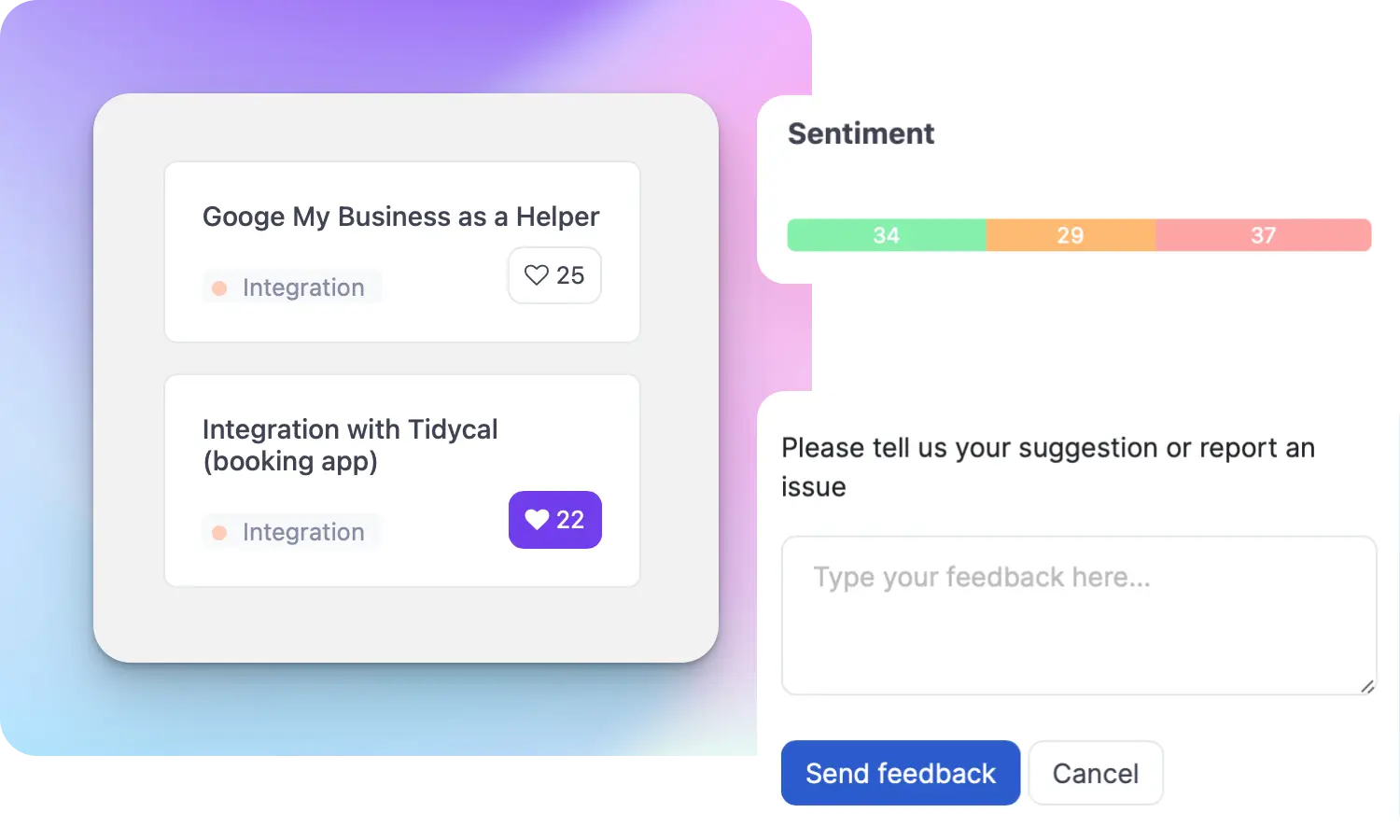
That's why we created ProductLift - to put all feedback in one place, helping teams easily see what features matter most.
In the last five years, we've helped over 5,204 product teams (like yours) double feature adoption and halve the costs. I'd love for you to give it a try.
Ruben Buijs
Founder & Digital Consultant